
Softlines, Apparel & Luggage Inspection: On-Site Verification for Textile and Travel Goods Compliance
Softlines have a habit of passing every check at the sample stage and failing on the shelf. A measurement that shifts 1.5 cm between adjacent sizes. A seam that holds under manual tug but splits at the stress point after one wear. A trolley case wheel that rolls smoothly empty and separates under the declared load. With 17 years of third-party product inspection in China, we have learned that softlines and travel goods defects are rarely about fabric quality alone — they are about how the product behaves once it leaves the factory floor. This document outlines the scope, test protocols, sampling rules and applicable standards for on-site pre-shipment inspection of apparel, textiles, bags and luggage manufactured in China, for reference by importers, sourcing managers and quality engineers.
Softlines are subject to both structural requirements (dimensions, seams, hardware) and regulatory requirements (fiber content, labeling, flammability, chemical residues). A single missing care label, a drawstring exceeding the permitted length on children's outerwear, or a zipper that fails under load can trigger a customs hold, a marketplace delisting or a return batch. These risks cannot be settled from a specification sheet — they require sampling and physical verification on the factory floor.
Common non-conformities found at factory sites concentrate where the product carries load or carries regulation: measurement drift between graded sizes, seam slippage at high-stress points, zipper and hardware failure under load, color shading between fabric rolls, and labeling that does not match the destination market's requirements. Such defects are not reliably visible in product photos — they surface in use, after the container has sailed.
A standardised softlines quality inspection follows systematic sampling protocols beyond visual review, covering measurement verification, seam strength, needle detection, colorfastness, hardware function, labeling and packaging. It is delivered as a quality inspection service built on ANSI/ASQ Z1.4-2003 (R2018) sampling. The sections below define inspection coverage by product category and the physical test protocols our inspectors perform on site.
Softlines, Apparel & Luggage Inspection Scope
Apparel & Garments
Ready-to-wear, sportswear, denim, underwear, nightwear, outerwear, baby clothing and uniforms. Checks cover measurement against the graded spec, seam strength at high-stress points, stitch density, colorfastness, care and content label accuracy, and needle detection. Common findings: measurement drift between sizes, uneven hem or sleeve symmetry after folding, skipped stitches at armhole seams, and incorrect care instructions.
Bags & Luggage
Hard and soft trolley cases, backpacks, handbags, sports and duffle bags, travel gear and laptop sleeves. Functional tests include stitch strength, zipper cycling, hardware and closure checks, static load tests to size-specific limits, jerk tests on handles and hooks, hard-shell impact, wheel attachment and wheel rolling performance.
Home Textiles & Accessories
Bedding sets, towels, curtains, cushions, footwear, caps, belts and gloves. Evaluation covers colorfastness, shrinkage after wash, thread count and GSM verification, hem and border finishing, and labeling.
Children's Apparel
Additional checks apply under CPSIA, EN 14682 and ASTM F1816 / 16 CFR Part 1120: drawstring length and placement, small parts security, sharp points and edges, and cord entanglement risks on hoodies and jackets. Any drawstring at the hood or neck of children's upper outerwear is treated as a critical non-conformity in most markets.
Footwear
Upper-to-sole bond strength, lasting and cementing quality, insole and lining material, sole flex and abrasion resistance, sizing accuracy and packaging. Common findings: sole separation at the toe, misaligned eyelets, and inconsistent sizing between pairs.
Knitwear & Sweaters
Stitch density, yarn quality, pilling resistance, rib stability at cuffs and hems, and dimensional stability after wash. Common findings: neckline distortion after stretching, uneven dyeing between panels, and loose yarn ends on visible surfaces.
Real Cases: How Softlines and Travel Goods Defects Reach a Container
Softlines defects rarely announce themselves on the sample bench. They surface weeks later as a customer complaint, a shipment return or a marketplace delisting, by which time the container has been unloaded. The three patterns below recur most often on apparel and travel goods production lines.
The Measurement That Passed the Sample and Failed the Sizes
A hoodie sample measures correctly in medium. Graded production across S, M, L and XL drifts by 1.5 to 2 cm between adjacent sizes, so the L arrives closer to a customer's expected XL. The spec sheet says tolerance is ±1 cm. The problem does not surface until end consumers begin exchanging sizes, and by then the container is unpacked. Catching it at the factory means measuring every size in the run, not just the approved sample size — a step often skipped when the buyer supplies only one size for approval.
The Drawstring That Met the Spec by Half a Centimetre
A children's hooded jacket for ages 7–14 is sampled with a hood drawstring adjusting tab. Under EN 14682, functional cords and adjusting tabs in this age band are limited to 75 mm. On the approved sample, the tab measures 73 mm and passes. In production, the elastic cord runs 5–8 mm longer on some units, pushing a fraction of the batch above the 75 mm threshold. The defect appears in a fraction of the batch, but that fraction is what customs inspectors flag. The fix is a physical measurement on sampled units, per size, against the destination market limit.
The Wheel That Separated on the Stairs
A 24-inch trolley case passes every visual and functional check on the flat factory floor. Loaded to 30 kg and taken up five flights of stairs, the wheel attachment loosens on the third cycle. This is the same defect that produces returns after a single trip. The test on the flat floor is quick and it is the test most suppliers prefer, because wheels rarely fail on a smooth surface. The accurate test is loaded stair climbing and 100-metre loaded rolling — a check that takes fifteen minutes and requires the factory to supply the specified fill weight.
None of these three failures is visible in a product photo, and none of them can be settled at a desk. They are found by handling the sampled units on the factory floor, with the right gauge and load in hand, before the cartons are sealed.
On-Site Physical Testing Protocols
The following physical and functional tests represent the standard baseline for third-party softlines inspections. Test parameters are adjusted per product category, destination market standards and the buyer's written technical specification. Functional and destructive tests are performed on a small number of sample units drawn separately from the AQL appearance sample — this is standard practice for load-bearing, cycling and impact tests, since a unit can be tested to destruction but cannot be shipped.
1. Measurement Verification
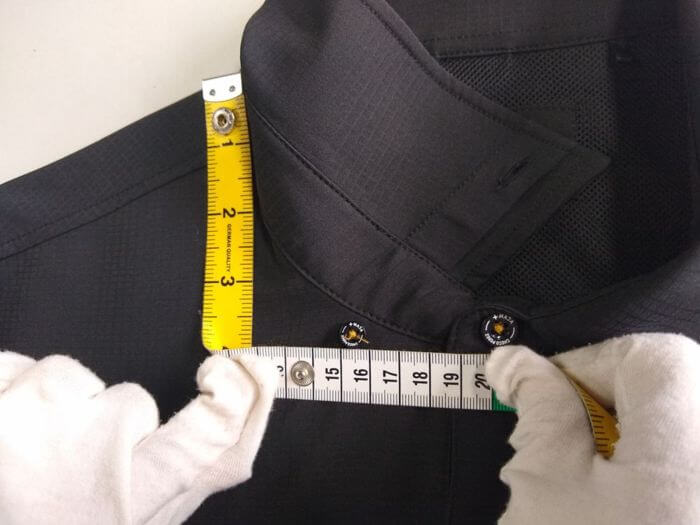
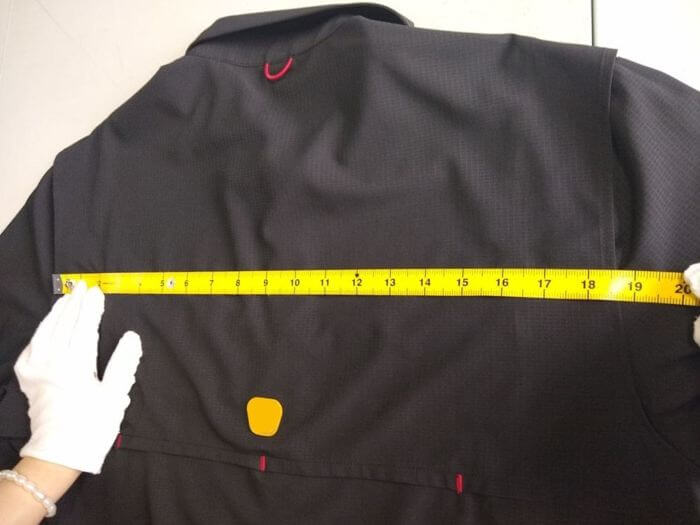
All critical dimensions are measured flat on a calibrated surface with the garment or bag relaxed for a defined interval after removal from packaging. Tolerances are checked against the buyer's graded spec sheet, per size — not only the approved sample size. Points of measure typically include chest, waist, hip, front length, sleeve length, neckline width, hem width, bag capacity and bag height. Any measurement outside tolerance is photographed with the tape in position, and the deviation is recorded in centimetres.
2. Fold & Symmetry Check
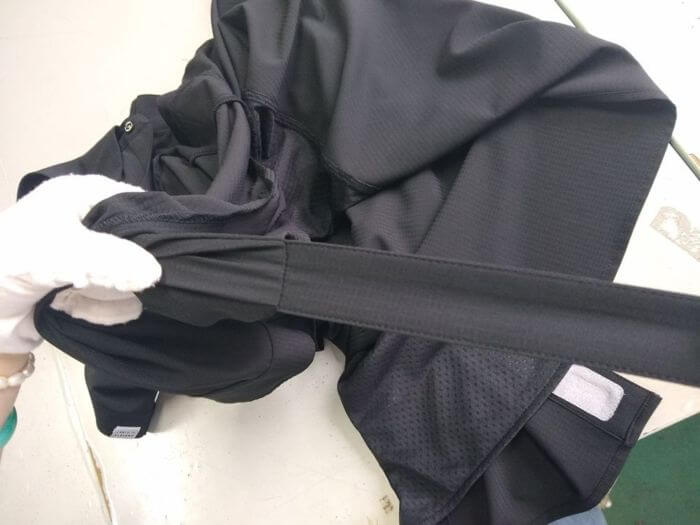
A garment or bag is folded along its center line and checked for left-right symmetry. This is the fastest way to catch panel misalignment, uneven hem lengths, mismatched sleeve openings or off-center pockets — defects that measurement alone does not reveal, because a sleeve can be within tolerance in length but cut on a different angle from its pair.
For apparel, the fold test covers: front and back panel symmetry, shoulder-to-shoulder alignment, sleeve length and opening symmetry, collar centering, side seam straightness, hem levelness, and pocket placement. For bags, it covers: handle and strap attachment symmetry, zipper centering, pocket alignment and side panel balance. Any visible deviation is recorded with a photograph of the folded unit, and the measurement of the offset is recorded in millimetres.
3. Seam Strength & Stitching Quality
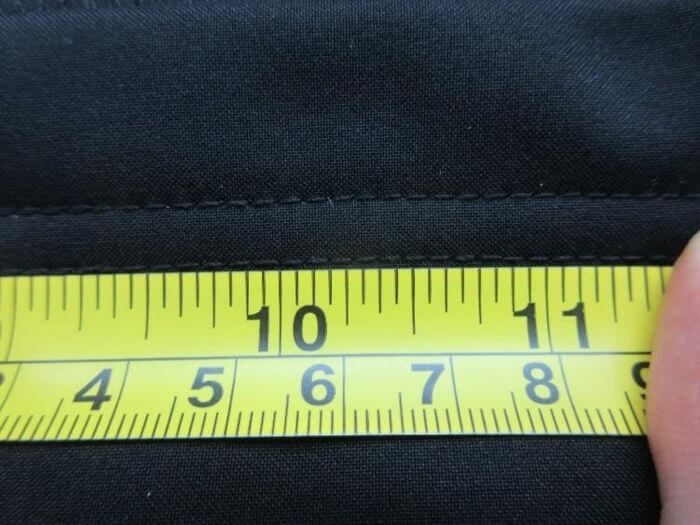
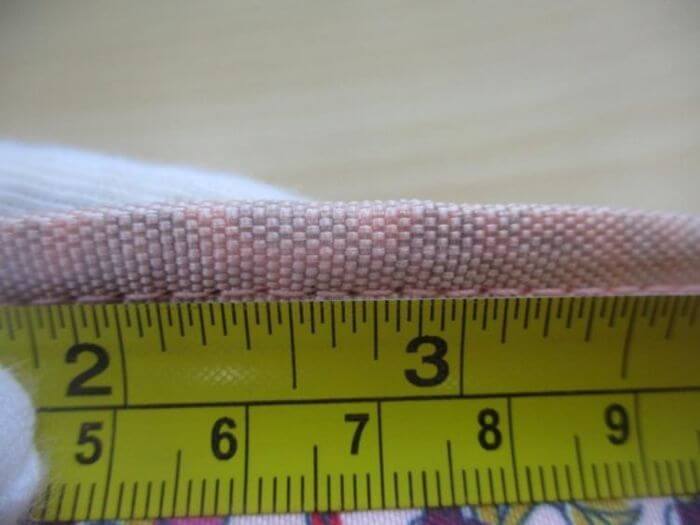
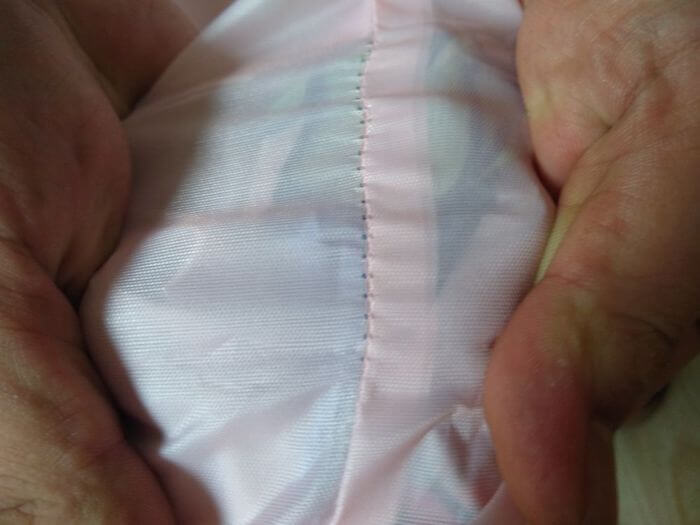
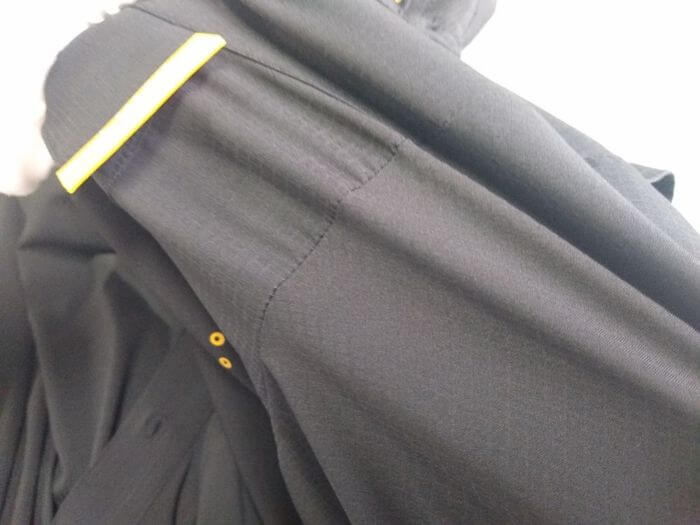
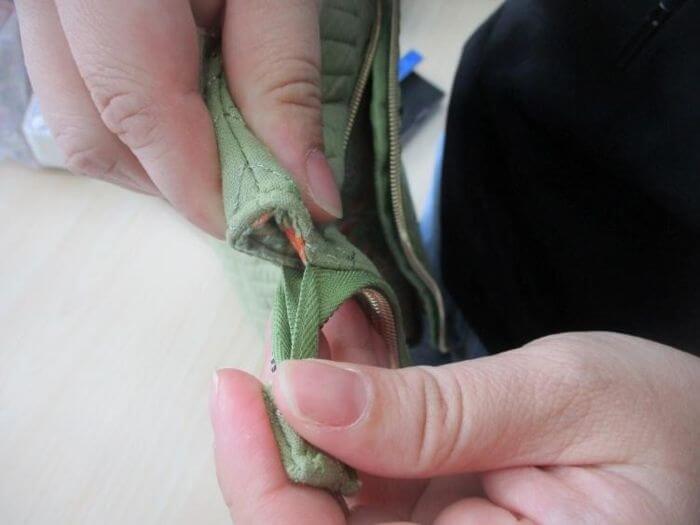
Seam strength is verified at the high-stress points where the seam is most likely to fail in wear: shoulder seams, armhole seams, side seams, crotch seams, waistband attachment and knee areas on trousers. On bags and luggage, the stitch line is gripped and opposing force applied in 10 pull-and-release cycles — no cracking is allowed, mesh movement up to 2 mm is permitted without pattern change. Stitch density is counted against the specification (commonly 10 to 12 stitches per inch for woven garments). Seam type, thread tension and back-tacking at seam ends are checked.
4. Needle Detection & Metal Safety
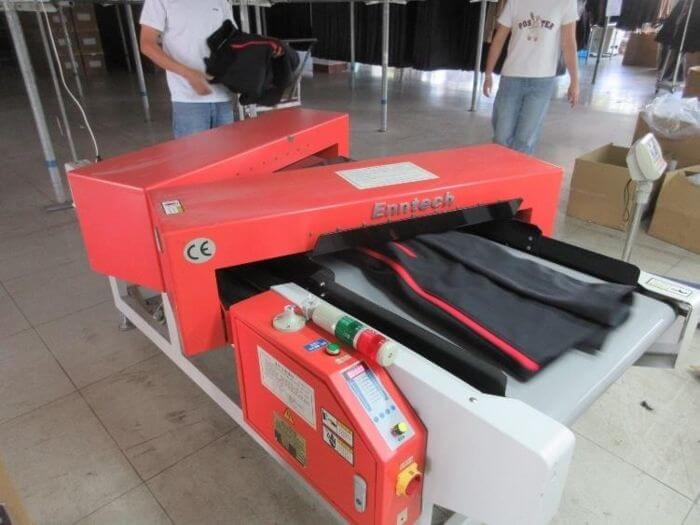
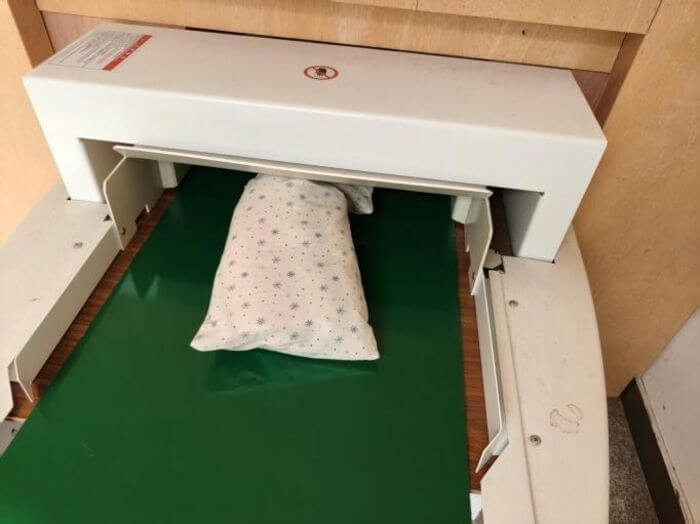
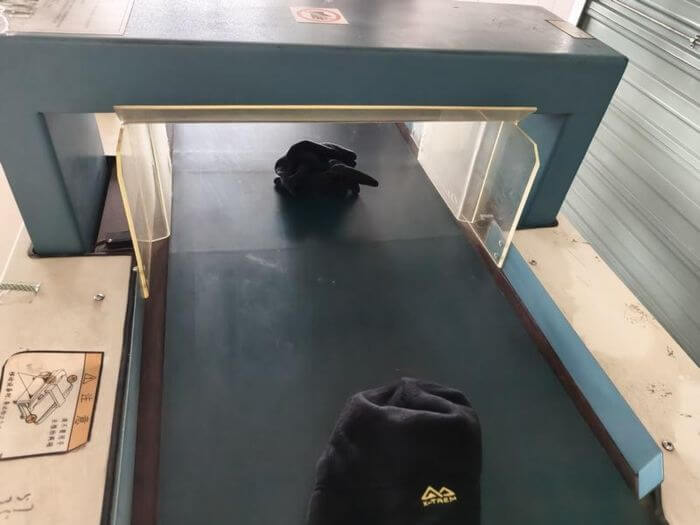
Every garment and every bag is passed through a needle detector on the production line or at final inspection. For babywear and children's items, 100% pass-through metal detection is performed with calibrated equipment — no exceptions. Where the factory does not have a functioning needle detector, the inspector verifies an alternative metal detection process or records the absence as a process non-conformity. A broken needle fragment embedded in a garment is treated as a critical non-conformity in every destination market.
5. Colorfastness, Shading & Consistency
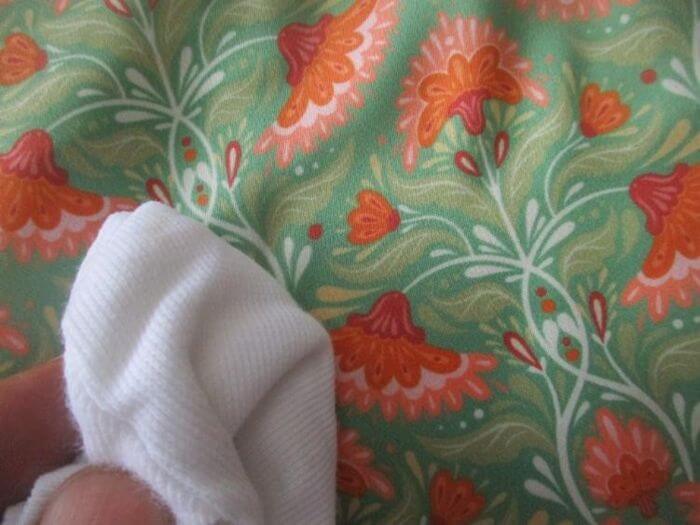
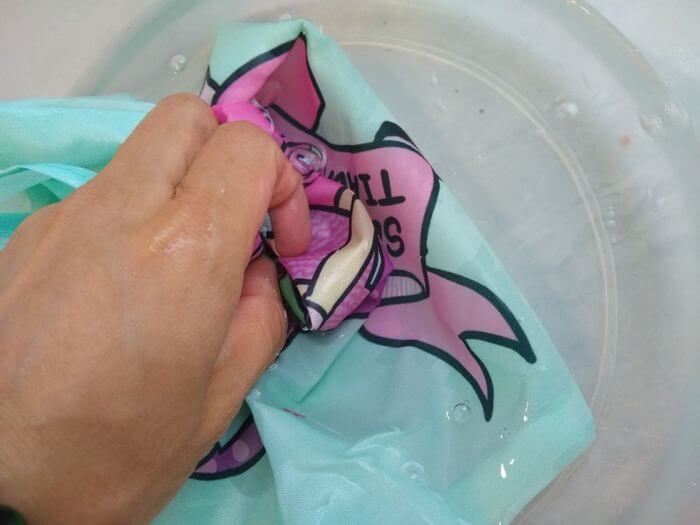
Colorfastness is tested with a dry white cotton fabric rubbed firmly against the fabric or bag outer surface for ten passes, following the principle of AATCC 8. For hard-shell luggage, the same dry-rub test applies — no color transfer to the white fabric is permitted. Cross-panel and cross-roll color matching within the same garment and across units in the same lot is evaluated under a D65 standard light box, using ISO / AATCC Grey Scales to record the difference. Batch-to-batch shading is one of the most common causes of consumer complaints.
6. Fabric & Material Verification
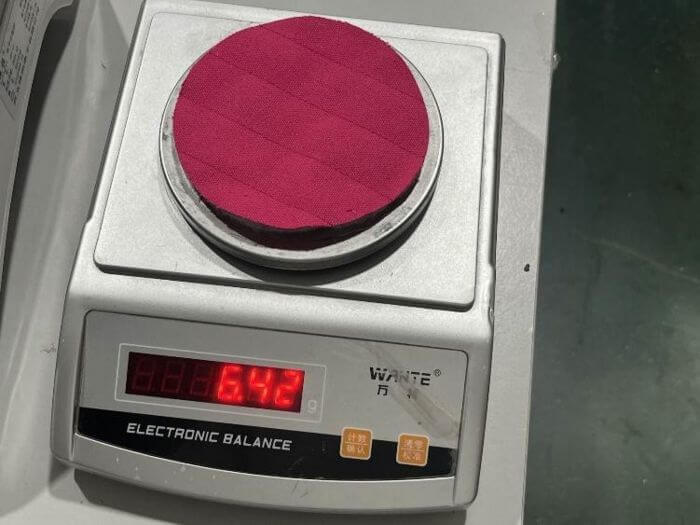
Fabric weight is verified against the specification (typically expressed in GSM) using a fabric cutter and scale. Fiber content is checked against the label declaration by visual and tactile assessment where feasible, with samples retained for laboratory confirmation where required. Zipper type, thread type, interlining, hardware materials and shell material are compared against the approved sample.
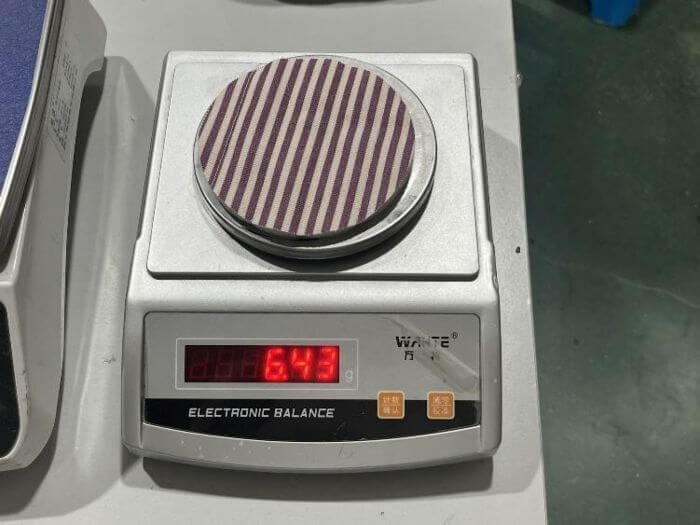
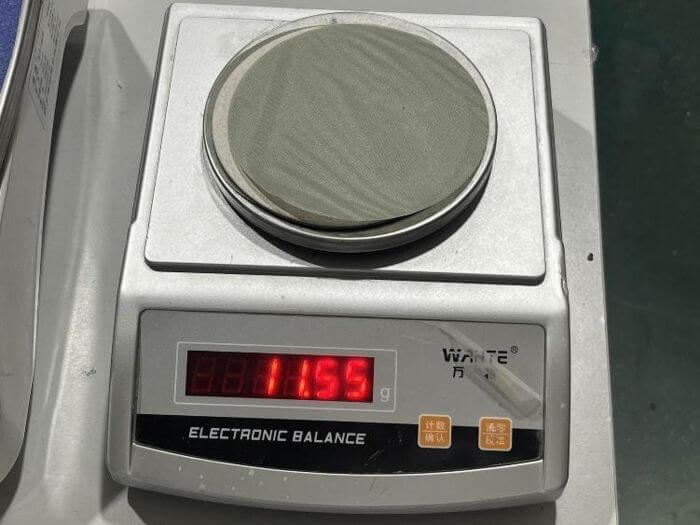
Pilling resistance (knitwear and sweaters): Pilling is assessed by the Martindale method (ISO 12945-2) or the random tumble pilling test (ASTM D3512) at the laboratory when a graded result is required. On-site, the inspector performs a visual check for obvious surface fuzz, loose fibres and pilling along the cuffs, underarm and side body areas, and photographs any visible pilling for the report. Pilling that appears on the approved sample within the stated wear cycle is treated as a Major non-conformity.
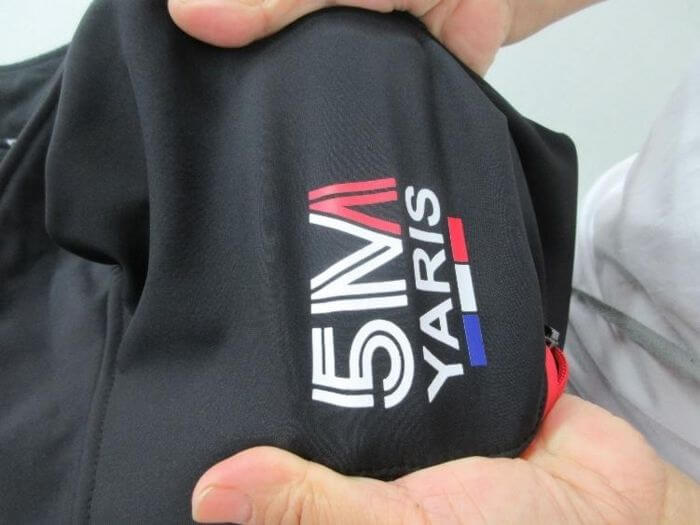
7. Material, Marking & Print Durability
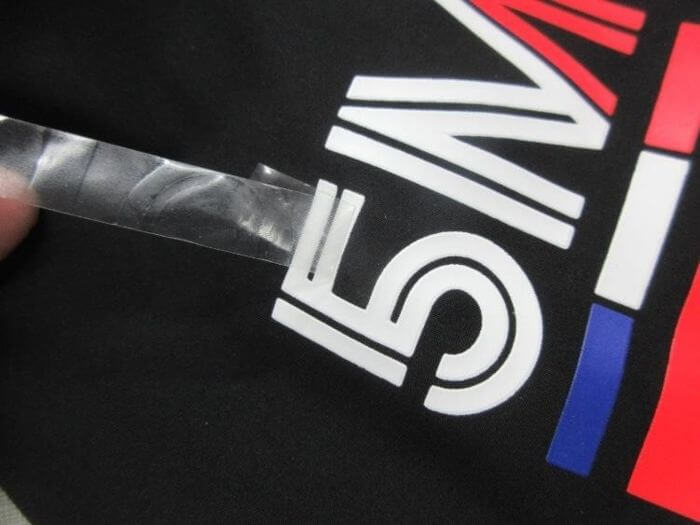
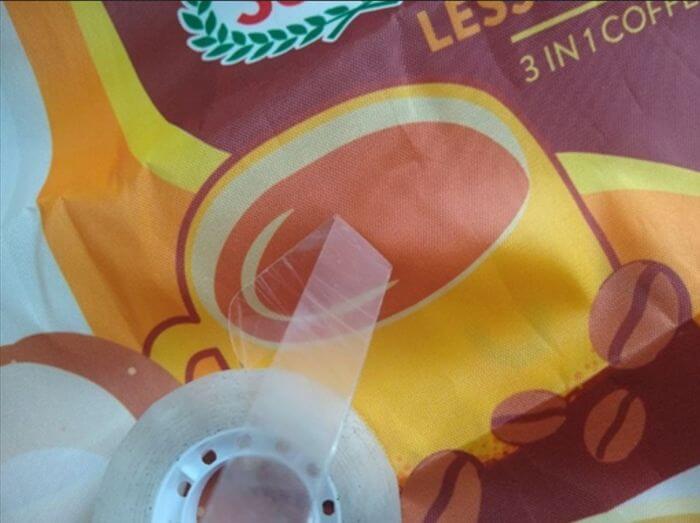
Surface markings, logos, prints and coatings are tested for adhesion and rub resistance, since a logo that peels after one wash or a label that fades after a single dry-clean turns a good garment into a return. The tests below apply to heat-transfer prints, screen prints, embroidery backing, silicone logos and coated fabrics.
Adhesion is checked by a tape-lift test: 3M 810 tape is pressed firmly over the print or coating, then pulled at a consistent angle. Any removal of the print or coating beyond the acceptance threshold is recorded as a non-conformity. The cross-cut method defined in ISO 2409 is performed at the laboratory when a graded adhesion classification is required; the on-site tape-lift is a pass/fail screen intended to flag delamination early rather than assign an ISO 2409 class.
Rub resistance is tested with a soft cloth dampened with water and isopropyl alcohol, drawn across the surface in 10 passes. Transferred colour, blurred print edges or lifted coating are recorded.
8. Hardware & Functional Testing
Zippers are opened and closed for 10 consecutive cycles — operation must be smooth across the full length, with no jamming, skipped teeth or track separation. Buttons, magnetic snaps and Velcro are operated 10 times for open and close: no hardware detachment, magnet must remain functional, and no Velcro stitch cracking. Rivets, D-rings and buckles are checked for security under tension. Snaps are checked for both retention and release force.
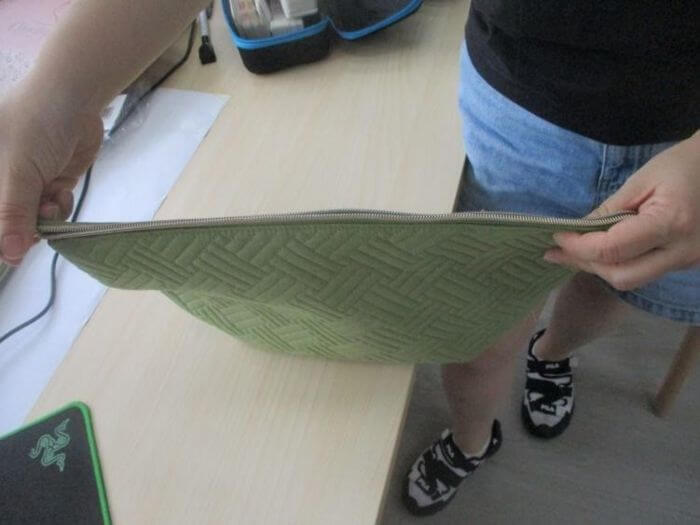
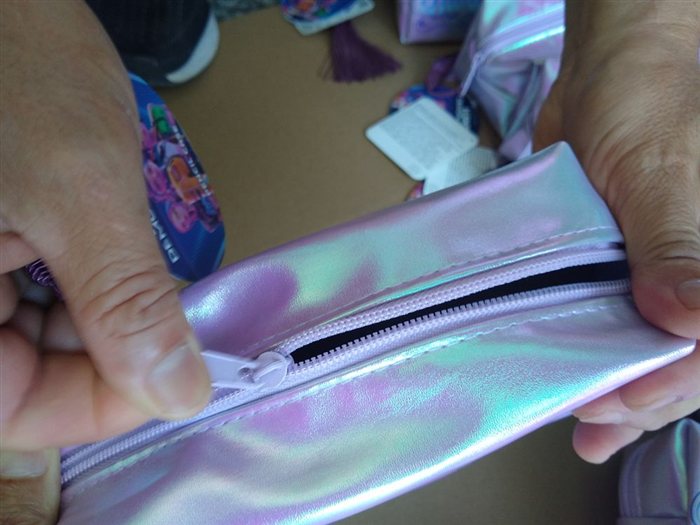
Metal hardware corrosion: Metal hardware in prolonged contact with skin or exposed to humidity — zippers, buckles, D-rings, snap fasteners and decorative metal fittings — is checked for surface finish, plating defects and sharp edges. Where the buyer's specification or the destination market requires corrosion testing, the sample is sent to the laboratory for a neutral salt spray test to ASTM B117 (commonly 24-hour or 48-hour exposure), and the result is recorded separately from the on-site pass/fail check.
9. Children's Apparel Safety Checks
For children's garments, additional checks apply under CPSIA, EN 14682 and the destination market regulations. EN 14682 prohibits functional drawstrings and cords at the hood and neck of young children's upper outerwear (under approximately 7 years / 134 cm) and limits functional cords and adjusting tabs to 75 mm for ages 7–14; chest and waist drawstring free ends are limited to 140 mm. The US regime under ASTM F1816 / 16 CFR Part 1120 differs: hood and neck drawstrings are prohibited outright in sizes 2T–12, and waist / bottom drawstrings in sizes 2T–16 must not extend more than 75 mm outside the garment channel and cannot carry toggles, knots or continuous free ends. Small parts attached to children's garments are pull-tested against the applicable force. Cord entanglement risks on hoodies and jackets are checked against the current regulation in the destination market.
Small parts pull force: For children's products intended for ages 3 and under, small parts are pull-tested at 15 lbf (approximately 6.8 kg) per 16 CFR 1500.51. For buttons, snaps and decorative attachments on garments across all children's sizes, the applicable force follows the same federal standard unless the buyer's specification sets a higher force. Any small part that detaches under the test force is treated as a Critical non-conformity for the US market.
Tracking label: Under CPSIA tracking-label requirements, permanent tracking information (manufacturer, production location, date of manufacture, and batch or run number) is verified as sewn-in or directly printed on the garment — hangtags, adhesive stickers and removable inserts do not qualify. Missing or non-permanent tracking labels on children's products are recorded as a Major non-conformity for the US market.
10. Labeling, Care & Content Verification
Care labels, fiber content labels, country of origin, and any required safety warnings are verified against the destination market requirements. A missing or incorrect care label is treated as a non-conformity in every major market, and in some cases as a critical one. Placement, legibility and language requirements are checked against the buyer's specification and the destination market rules.
11. Dimensional Stability After Wash
Where the buyer's specification requires it, a sample garment or fabric panel is washed following the care label instructions and re-measured after a defined relaxation period. Shrinkage beyond the specified tolerance is recorded as a major non-conformity. This test is run in-factory using the factory's own wash equipment and is distinct from the laboratory wash tests used for certification.
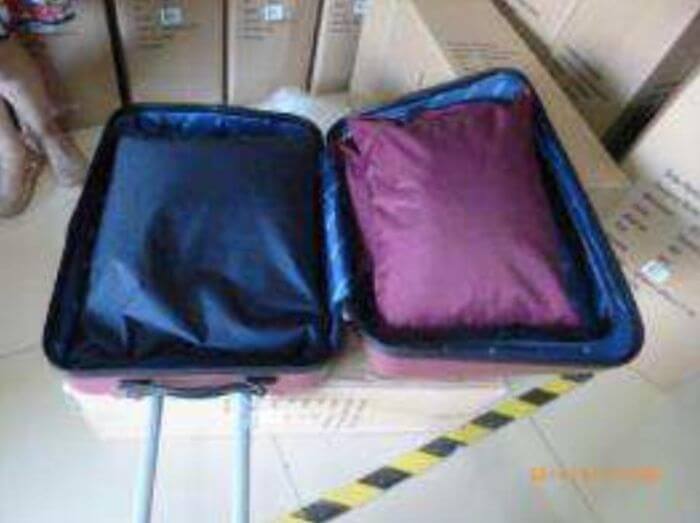
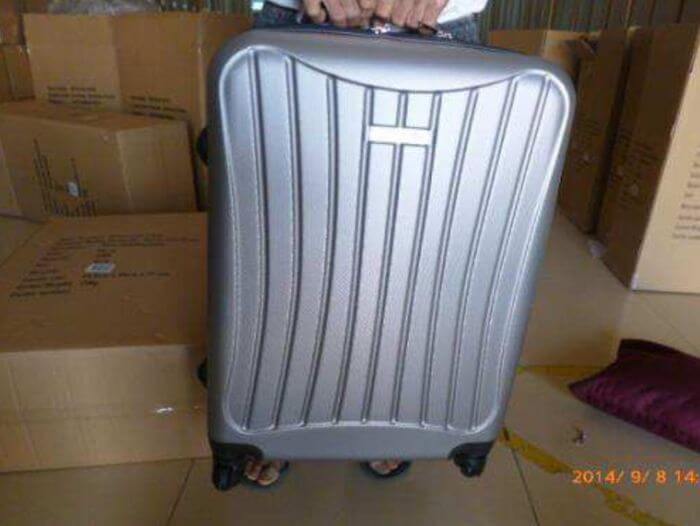
12. Luggage & Trolley Specific On-Site Tests
Bags and luggage are tested under the load the product is designed to carry, not under an empty bench condition. The protocols below are drawn from our standard travel goods inspection checklist and are adjusted per product type, size and destination market. Test parameters follow the buyer's written specification where provided.
Note: TDOC refers to the buyer's technical documentation — the product manual, spec sheet and any approved drawings supplied for the order. Test parameters follow the TDOC where one is provided; otherwise the figures stated in this table are used.
| Test Item | Inspection Method | Requirement / Tolerance | Sample Size |
|---|---|---|---|
| Stitch Strength | Grasp the stitch line and apply opposing force in 10 pull / release cycles | No cracking; mesh movement up to 2 mm; no pattern change | 1 pc |
| Zipper Smoothness | Open and close the zipper 10 consecutive times | Smooth operation without jamming or teeth separation | S-1 |
| Button / Magnet / Velcro | Operate 10 times for open and close | No loose buttons or magnets; magnets functional; no Velcro stitch cracking | 2 pcs |
| Trolley Locking System | Functional check following the instruction manual | Locks and unlocks functionally per TDOC | 1 pc |
| Extendable Handle | Pull out to full length and check position | Locks into correct position per TDOC | S-1 |
| Loading Test | Lift all handles 5 times under full load. Pull out extendable handle if equipped | 20-inch: 20 kg · 24-inch: 30 kg · 28-inch: 40 kg · or the manufacturer's declared maximum load plus 10 kg. No loose parts, no deformation, no breakage | 1 pc |
| Protective Film Removal | Visual check on PC / ABS hard shells around edges and logos | Film easy to remove from all logo areas; a peel tab of at least 2 mm must be left uncut around each printed shape so the film can be removed by hand without tools | S-1 |
| Hard Shell Impact | Empty case, an adult of approx. 70 kg steps down firmly onto the shell 10 times, distributing impact across each face in turn | Shell must not crack, shatter or break | 1 pc |
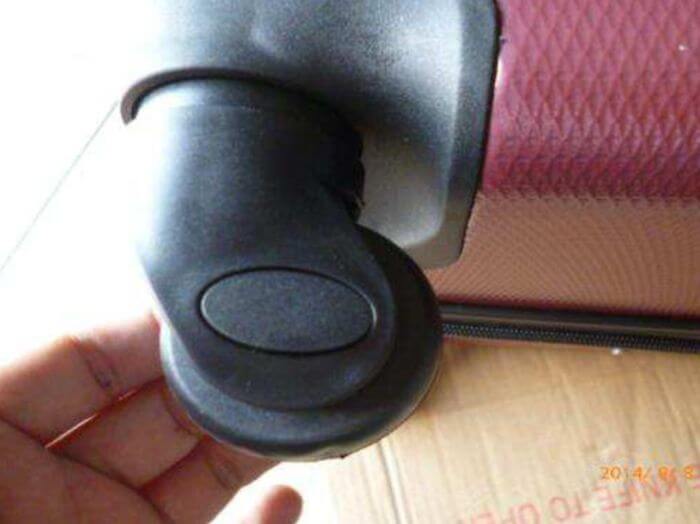
| Wheel Attachment | Load case to maximum load; climb 5 stairs 5 times | Wheels and axles must not loosen or break | 1 pc |
| Wheel Flatness & Rolling | Load to maximum; roll continuously for 100 metres | Smooth rolling, no abnormal noise, no bumps from wheel flatness | 1 pc |
| Wheel Rotation | Rotate the loaded wheel 720 degrees on its own axis | Spins smoothly without resistance or jamming | 1 pc |
13. Handbags, Backpacks & Sports Bags Specific Tests
| Test Item | Inspection Method | Requirement / Tolerance | Sample Size |
|---|---|---|---|
| Stitch Strength | Grasp the stitch line and apply opposing force in 10 pull / release cycles | No cracking; mesh movement up to 2 mm; no pattern change | 1 pc |
| Zipper Cycling | Open and close zippers 10 times | Smooth operation throughout the track | S-1 |
| Hardware & Closure | Operate buttons, magnetic snaps and Velcro 10 times for open / close | No hardware detachment; magnets hold securely; no seam cracking | 2 pcs |
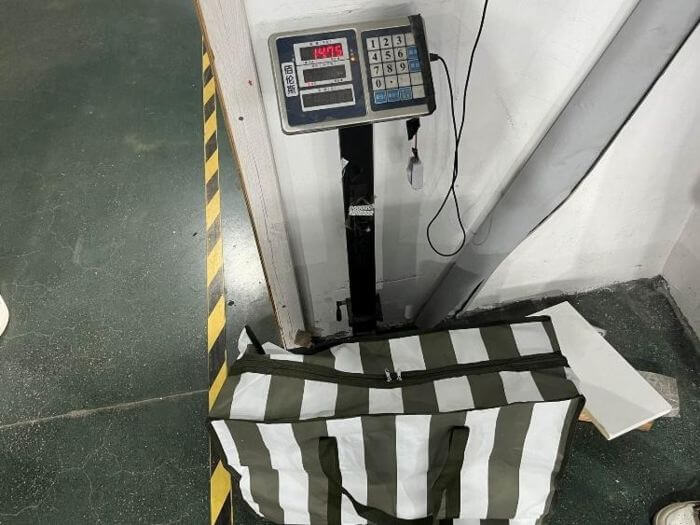
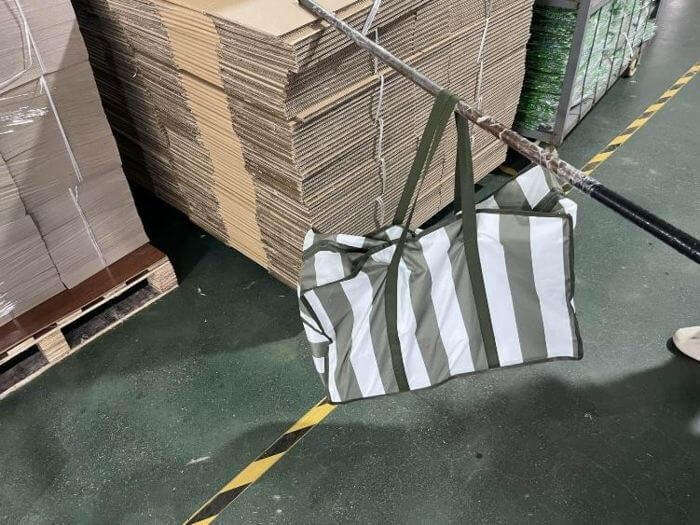
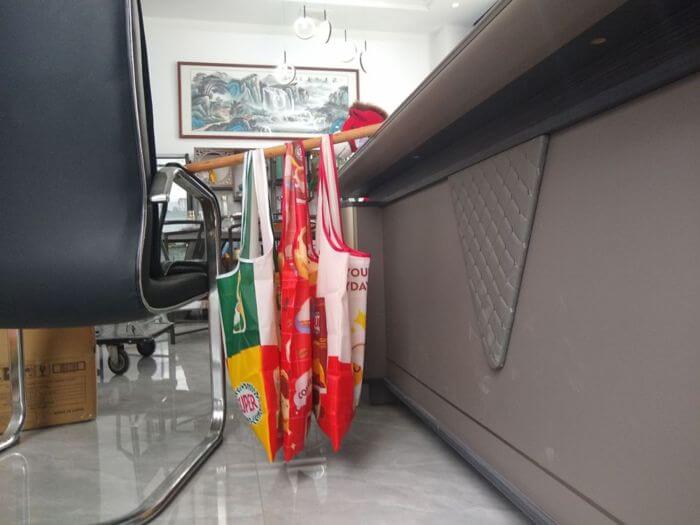
| Bag Static Loading | Load bag in normal using position, hold for 1 hour | Small bag <20 cm: 5 kg · Handbag: 10 kg · Backpack: 25 kg · Sports bag: 35 kg. Handle must not crack; zipper must not open by itself; no seam bursting | 2 pcs |
| Handle, Hook & Grip Jerk | Pull each load-bearing part with 3 kg equivalent force, 10 rapid cycles | No structural cracking; no stitching line failure or tear | 2 pcs |
| Rubbing Fastness | Rub dry white cotton fabric 10 times against bag outer surface | White fabric must remain clean/white; no color bleeding | 1 per color |
14. Footwear Specific On-Site Tests
Footwear requires its own test set because the failure modes — sole separation, heel detachment, lining wear — behave differently from apparel and bags. The protocols below are run on sampled pairs, in the size distribution specified by the buyer.
| Test Item | Inspection Method | Requirement / Tolerance | Sample Size |
|---|---|---|---|
| Upper-to-Sole Bond | Flex the shoe by hand at the toe area and apply lateral pressure to the welt | No bond separation, no visible gap between upper and sole | 1 pair |
| Heel Attachment | Apply lateral and vertical force to the heel counter by hand | Heel must not detach, deform or shift from its seated position | 1 pair |
| Sole Flex | Bend the sole at the flex point repeatedly by hand and inspect for cracking or whitening | No cracking, no whitening at the flex line, no separation at the midsole | 1 pair |
| Outsole Abrasion | Visual check of outsole hardness and pattern depth against the specification | Meets the specified hardness range and pattern depth; no obvious surface defects | 1 pair |
| Sizing Accuracy | Measure left and right shoe against the graded spec sheet at three points (length, width, heel-to-ball) | Both shoes within the tolerance for the declared size; left and right matched to each other | 1 pair |
| Lining & Insole | Check lining material, stitching, insole adhesion and footbed quality | Lining secured, no loose stitching, insole glued flat with no lift at edges | 1 pair |
| Eyelets & Hardware | Check eyelet placement, lace hooks, buckle and velcro function | Symmetrical placement, secure attachment, functional under manual cycling | 1 pair |
Applicable Softlines Standards
| Target Market | Key Regulations & Standards |
|---|---|
| United States | CPSIA (Public Law 110-314, children's apparel), 16 CFR 1610 (flammability of clothing textiles), 16 CFR 1615/1616 (children's sleepwear), 16 CFR Part 1120 and ASTM F1816 (drawstrings on children's upper outerwear), FTC fiber content and care labeling rules |
| European Union | EN 14682 (children's drawstrings), REACH (restricted substances), EU Textile Regulation 1007/2011, EN ISO 3758 (care labeling), GPSR (EU) 2023/988 (responsible person on label or packaging, batch / lot or serial number, language of the destination market) |
| China | GB 18401 (basic safety requirements for textiles), GB 31701 (safety for children's textiles) |
| International | ISO 3758, ISO 105 (colorfastness series), ISO 12945-2 (Martindale pilling), AATCC test methods (crock, wash, light fastness), ASTM D3512 (random tumble pilling), ASTM B117 (salt spray), ISO 2859-1 |
On-site factory-floor inspection covers physical, mechanical, visual and packaging assessment. Chemical compliance testing — including azo dyes, formaldehyde, heavy metals, phthalates, PFAS, nickel release from metal accessories in prolonged skin contact (EN 1811), and biocidal contaminants such as dimethyl fumarate (DMF, REACH Annex XVII entry 61, a recurring cause of Safety Gate alerts on textile furniture and leather goods) — requires separate sampling and testing at CNAS-accredited (ISO 17025) third-party laboratories. Where the destination market requires flammability testing, samples are retained for laboratory confirmation rather than settled on the factory floor.
Referenced Standards & Documents
- 16 CFR 1610 — Standard for the Flammability of Clothing Textiles (US)
- 16 CFR 1615 / 1616 — Flammability of Children's Sleepwear (US)
- 16 CFR Part 1120 — Substantial Product Hazard List (drawstrings on children's upper outerwear) (US)
- 16 CFR 1500.51 — Test methods for simulating use and abuse of toys and other articles intended for use by children 18 months of age or less (US)
- ASTM F1816-97 — Standard Safety Specification for Drawstrings on Children's Upper Outerwear (US)
- CPSIA (Public Law 110-314) — Consumer Product Safety Improvement Act (US)
- EN 14682 — Safety of children's clothing — cords and drawstrings
- EN 14878 — Textiles — Burning behaviour of children's nightwear
- EN ISO 3758 — Textiles — Care labelling code using symbols
- EN 1811 — Reference test method for release of nickel from post assemblies and items intended to come into direct and prolonged contact with the skin
- Regulation (EU) 1007/2011 — Textile fibre names and related labelling
- Regulation (EU) 2023/988 — General Product Safety Regulation (GPSR)
- GB 18401 — National general safety technical code for textile products (China)
- GB 31701 — Safety technical code for infants and children textile products (China)
- ISO 2409 — Paints and varnishes — Cross-cut test (tape adhesion method)
- ISO 12945-2 — Textiles — Determination of fabric propensity to surface fuzzing and to pilling — Part 2: Modified Martindale method
- ASTM D3512 — Standard Test Method for Pilling Resistance and Other Related Surface Changes of Textile Fabrics: Random Tumble Pilling Tester
- ASTM B117 — Standard Practice for Operating Salt Spray (Fog) Apparatus
- AATCC 8 — Colorfastness to Crocking: AATCC Crockmeter Method
- ANSI/ASQ Z1.4-2003 (R2018) — Sampling Procedures and Tables for Inspection by Attributes
Note: standard revisions are updated periodically. Confirm the current active revision for your target market prior to booking an inspection.
AQL Defect Classification for Softlines Inspection
| Defect Class | Typical Softlines Non-Conformities | Common AQL Baseline |
|---|---|---|
| Critical | Broken needle fragments in garment, sharp metal fragments, hazardous chemistry, mold or mildew, drawstring at neck of children's outerwear beyond permitted limit, missing children's safety warning labels | 0 (zero tolerance) |
| Major | Measurement deviation beyond tolerance, seam slippage under strain, zipper failure under load, wheel locking malfunction, colorfastness failure, shrinkage beyond spec, missing or incorrect care label, visible color shading, wheel detachment under load, print or coating delamination, upper-to-sole separation on footwear | 2.5 |
| Minor | Uncut thread ends over 1 cm, minor cleanable soil marks, slight wobble on non-critical topstitching, minor packaging soiling | 4.0 |
The listed AQL values represent widely adopted industry baselines and are not fixed mandatory limits. Sample sizes follow ANSI/ASQ Z1.4 General Inspection Level II. Final protocols are defined by combining channel requirements, product quality risk rating and historical non-conformity data.
Appendix: Sampling & Acceptance Rules
Product inspection uses ANSI/ASQ Z1.4-2003 (R2018), General Inspection Level II, normal single inspection.
- Any identified Critical non-conformity results in the batch being rejected outright.
- Accept or reject decisions for Major and Minor defects follow the corresponding AQL acceptance number.
- Samples are randomly selected from finished goods, covering multiple sizes, colors and production lots.
- Functional and destructive tests — seam strength tests, zipper cycling, loading tests, jerk tests, hard-shell impact, wheel tests, and footwear flex tests — are performed on a small number of sample units drawn separately from the AQL sample. Non-destructive functional tests typically follow Special Sampling Level S-1 or S-2 (1 to 2 pieces per colorway), which avoids destroying commercial stock while still confirming functional safety.
- A client's written custom sampling plan overrides the default rules when provided.
Custom Softlines Inspection Protocol Development
Independent inspection protocols are defined individually for each softlines shipment. Custom inspection plans are built from the following inputs:
- Graded spec sheet defining points of measure and tolerance, per size
- Golden sample and color standard, used as the visual and dimensional reference
- Destination market standards: CPSIA, 16 CFR 1610, EN 14682, REACH, GB 18401, GB 31701
- Care, fiber content and country-of-origin labeling requirements
- Packaging and container loading requirements: polybag, hangtag, size sticker, carton and shipping mark
- Historical non-conformity records, with higher inspection weighting assigned to recurring defects from prior batches
Before inspection execution, checklist items and acceptance criteria are confirmed between inspector and buyer, and the AQL sampling plan is documented in writing. The inspector then draws representative units per ANSI/ASQ Z1.4 and executes every check defined in the protocol.
If you are placing a first order with a new supplier, a factory audit before production catches a large share of these risks at the source — in-house needle detection, sample room capability, cutting accuracy and finishing controls.
Softlines Inspection Report Deliverables
Most third-party inspection companies in China issue a full English inspection report within 24 hours after on-site work completion, including sampling records, measurement data with point-of-measure references, defect imagery and non-conformity statements. Critical and Major non-conformities are listed separately with supporting photographic evidence, and measurement deviations are recorded in centimetres with the tape in the photographed position. Where applicable, hard-shell impact, wheel, load and footwear flex test results are documented with the tested sample set aside and photographed before and after testing.
A custom inspection protocol and quotation can be prepared for your softlines shipment. Submit your product information to receive a technical assessment of inspection scope and sampling strategy.
Documented Inspection Findings (Technical Examples)
Measurement Drift Across Sizes
Sample: men's hooded sweatshirt, sizes S to XL. The approved M sample measured within tolerance. On production units, the M-to-L step exceeded the graded spec by 1.8 cm at the chest and 1.2 cm at the front length, so the L arrived closer to the customer's expected XL. Classified as a Major non-conformity. Hazard: size exchange and return at retail.
Drawstring Length at Neck on Children's Outerwear
Sample: children's windbreaker with hood drawstring. Physical measurement of the free end at the neck exceeded the destination market limit on several production units. The approved sample had passed by a narrow margin, and the deviation only appeared when the full run was measured. Classified as a Critical non-conformity. Hazard: strangulation and customs hold at destination.
Zipper Failure Under Load
Sample: 45 L travel backpack. Main compartment zipper cycled three times under the declared 12 kg load. The track separated at the curve near the corner of the opening on the second cycle — a defect that did not appear with the same zipper cycled empty. Classified as a Major non-conformity. Hazard: contents spill and return.
Wheel Attachment Failure on Loaded Stairs
Sample: 24-inch hard-shell trolley case, loaded to 30 kg per size specification. Wheel attachment loosened on the third of five stair-climb cycles, and the swivel axis developed play. Classified as a Major non-conformity. Hazard: in-use failure and return.
Color Shading Between Panels
Sample: cotton polo shirt. Sleeve panels and body panels came from different fabric rolls. Under a D65 light box, the sleeve panel showed visible shading against the body, and the defect appeared in approximately one third of sampled units. Classified as a Major non-conformity. Hazard: consumer perception and return.
Care Label Mismatch
Sample: women's knit top. The sewn-in care label listed a washing temperature and fiber composition that did not match the approved specification, and the country-of-origin marking was placed on a hangtag rather than the sewn-in label required by the destination market. Classified as a Major non-conformity. Hazard: customs hold and marketplace delisting.
The above are representative technical records from factory inspections. They are provided for technical reference only and do not refer to any specific brand or client.