Why DPI Exists: The Problem It Solves
Pre-shipment inspection is the final gate. If defects surface there, the goods are already made, packed, and sometimes sitting in a port warehouse. Your options at that point are limited: rework, discount, or ship and hope. Every one of them costs time and money.
During Production Inspection (DPI) — also called DUPRO in industry shorthand — happens much earlier, typically when 20% to 50% of the order is complete. At that point, if something is wrong, the factory still has time to correct it without ripping open sealed cartons or redoing entire batches.
That's the core value proposition of product inspection service. It's not that a DPI catches more defects than a PSI — it doesn't. It's that the defects it catches are dramatically cheaper to fix.
What a DPI Covers: A Quick Reference
What exactly gets checked and how depends on your product, factory, and risk points. But an experienced inspector on a DPI typically works across six directions:
| Checkpoint | What the Inspector Looks At |
|---|---|
| Production Schedule & Capacity | Actual output vs. plan, estimated daily capacity, and whether the delivery date is still achievable. |
| Raw Materials & Components | Materials in use versus spec — weight, composition, brand — and whether anything has been substituted without approval. |
| Workmanship & Appearance | AQL-based sampling for visual defects, dimensional tolerances, and assembly quality. |
| Functional & Safety Testing | On-site functional tests, power-on checks, and basic safety verifications that can be done on the factory floor. |
| Equipment Calibration & Defect Disposal | Whether the factory's test instruments are within calibration, and whether defective units are clearly quarantined — not accidentally mixed back into the good production flow. |
| Sealed Lab Sample Collection | Random sampling from the active line, sealed on-site, and sent directly to a CNAS-accredited laboratory for chemical or safety testing. |
These six directions are a reference framework — not every DPI covers all of them. The actual checklist is customized once we understand your product and factory.
What a DPI Actually Looks Like on the Factory Floor
Every DPI is different, because every product and every factory is different. But the general shape of the day usually looks like this:
1. We Draw Samples from the Line — Not Just Finished Goods
In a pre-shipment inspection, you sample from finished, packed cartons. In a DPI, you sample from whatever exists at that moment: partially assembled units, finished pieces not yet packed, semi-finished components waiting for the next process step.
This matters because certain defects are only visible at specific stages. A seam problem in a garment is easy to see right after sewing, but much harder to spot once the garment is folded and polybagged. A structural flaw in a chair is obvious during frame assembly — and completely concealed once the upholstery goes on.
2. We Look at the Process, Not Just the Product
A DPI gives you something a PSI can't: a live look at how the goods are actually being made. We watch the line speed, how workers handle components, whether QC stations are genuinely staffed, and whether the factory is running your approved materials — or has quietly substituted something cheaper.
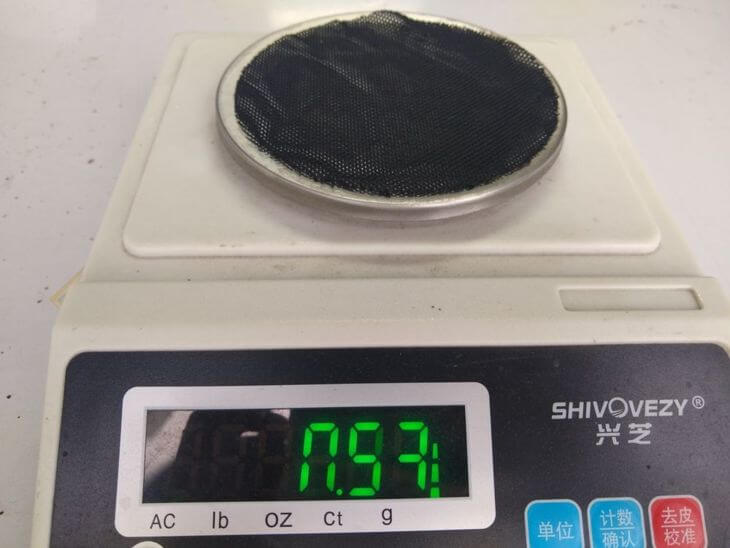
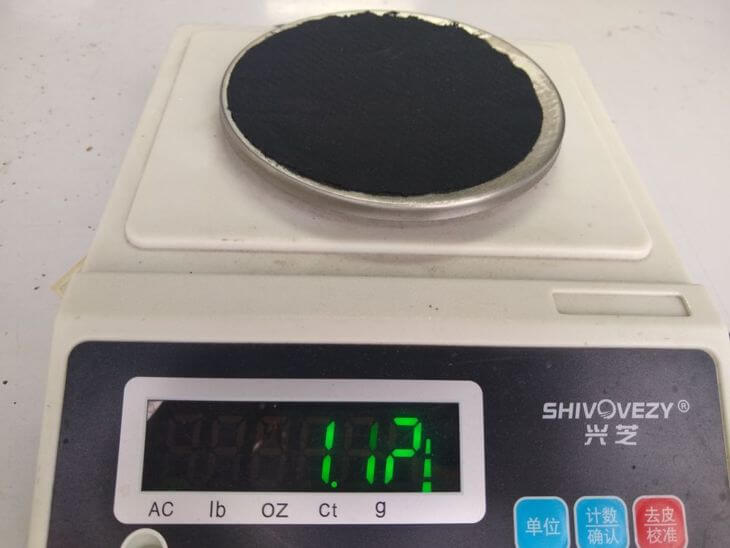
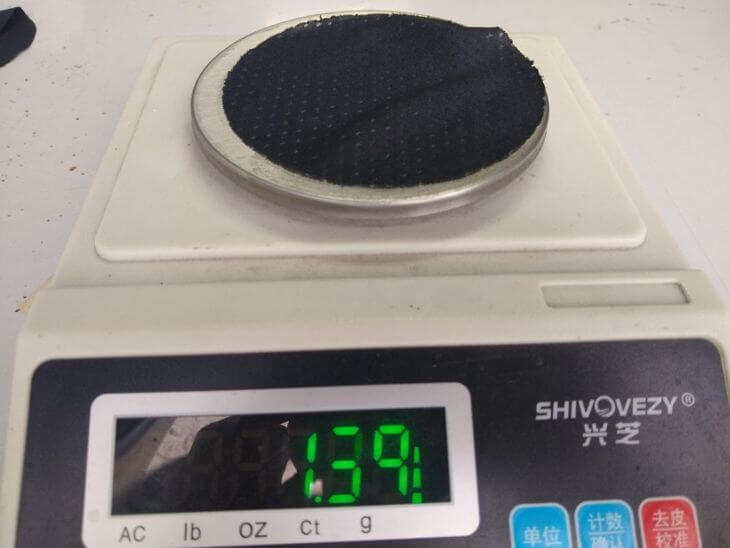
We've caught exactly that. One client's tech pack specified mesh at 100 GSM, body fabric at 140 GSM, lining at 150 GSM. Our inspector pulled fabric directly off the line and weighed it on the spot — every roll came in under spec: mesh at 80 GSM, body at 110 GSM, lining at 140 GSM. On the finished product, the difference is nearly invisible. In terms of durability and hand feel, it's not. (Full story in Case 2 below.)
Two easily overlooked process details that reveal a lot about a factory:
Equipment & Tool Calibration: Are the factory's scales, force gauges, calipers, and test instruments within their calibration validity? We've seen force gauges that were never zeroed and scales drifting more than 5% still in daily use. If the tools are wrong, the measurements mean nothing.
Defective Goods Quarantine: Do rejected units go into a clearly marked red bin or quarantine zone? If not, one careless movement puts defective pieces right back into the good-production flow. How a factory handles its rejects is one of the fastest ways to judge its quality maturity.
Sometimes the most important DPI finding isn't a defect on a specific unit at all — it's a process problem that will keep producing defects in the next 20,000 units unless somebody stops it.
3. We Check the First Output Against Your Golden Sample
If you've provided an approved sample, we compare what's coming off the line against it: color, weight, stitching, functionality — whatever dimensions matter most for your product. The earlier a deviation from the Golden Sample is caught, the less painful the conversation with the factory becomes.
4. We Run the Same AQL Sampling — Just on a Smaller Lot
The sampling methodology is identical to PSI: ANSI/ASQ Z1.4, General Inspection Level II by default. The difference is that the "lot" is whatever quantity is ready at that moment, not the full order. Smaller sample size — same math, same statistical rigor.
5. On-Site Sample Collection for Accredited Lab Testing
If your product requires regulatory testing — REACH, RoHS, CPSIA, FDA, CE — DPI is the critical checkpoint that prevents the factory from gaming the lab submission.
The common trick: when the factory submits samples themselves, they cherry-pick the best units — or produce a few special "golden" pieces just for the lab. The test report comes back clean. The actual shipment isn't.
During a DPI, the inspector pulls samples randomly from the active production line, seals them on-site with tamper-evident labels, photographs the process, and sends them directly to our partner CNAS-accredited laboratory. The factory has no chance to swap or cherry-pick. The test report you get back actually represents the goods you're about to ship.
For categories that demand regulatory compliance — toys, electronics, food-contact materials, textiles — sealed on-site lab sampling is a value only a mid-production inspection can deliver. It connects inspection and compliance at a single point on the timeline.
When DPI Makes Sense — And When It Doesn't
A DPI costs money. It's a man-day, billed like any other inspection. So it should only be booked when the value of early detection clearly justifies the cost.
DPI is usually worth it when:
- Order quantity is large — If you're making 20,000 units, catching a systematic problem at 30% completion saves the remaining 14,000 units from being made wrong. If you're making 500, a PSI at the end is probably sufficient.
- Production run is long — If the factory will spend six weeks on your order, a mid-point check is a cheap insurance policy.
- New factory or new product — First order with a factory? First time producing a new design? The risk of something going wrong early is at its highest.
- Materials are high-cost — If the raw materials are expensive, you don't want the factory burning through them on defective production.
- Rework is difficult — Some products can't be economically reworked. A table top cut wrong is scrap; a garment sewn wrong has to be unpicked and redone. Know your product's tolerance for rework.
- Packaging is irreversible — If the product goes into single-use packaging (color box, blister, inner tray destroyed on opening), a final inspection can't open enough samples to verify internal function. Mid-production is the only window to check deeply.
- Regulatory lab testing is required — If the product requires REACH, RoHS, CPSIA, or FDA testing, on-site sealed sampling ensures the lab receives specimens from the actual production line — not factory-selected specials.
DPI is often unnecessary when:
- Order is small and simple — A single PSI at the end covers most of the risk.
- You've worked with this factory for years — If their quality is stable and you trust their process, the extra check may be redundant.
- Production time is short — If the entire run takes five days, there's barely a "mid-point" to inspect.
- Budget is tight — If you have to choose between DPI and PSI, choose PSI. Final inspection is non-negotiable; DPI is an enhancement.
What We Often Find During DPI (And Why It Matters)
1. The Factory Started Before Everything Was Approved
More common than you'd think: factories begin production before all materials are approved, before the Golden Sample is signed off, or before the tech pack is fully confirmed. They're under schedule pressure, and they assume they can fix things later. A DPI catches this head start and forces the conversation early.
2. Raw Materials Were Substituted
The factory quoted you one fabric; when the order landed, they ran a cheaper one that was "almost the same." At DPI stage, we can check the materials actually in use against your spec, item by item. At PSI stage, the finished goods may look close enough that nobody notices — until the returns start.
3. The Line Is Running Faster Than It Should
Production speed and quality are usually inversely correlated. If the factory is behind schedule and pushing the line, defect rates climb. During a DPI we can see this happening in real time and flag it before the entire order is produced at rush pace.
4. Critical Components Are Already Failing
Sometimes a specific component — a zipper, a hinge, a power adapter — is systematically defective. Caught at DPI, the factory can switch suppliers before assembly continues. Caught at PSI, every unit already built with that component needs rework.
The Most Common Misconception About DPI
"DPI and PSI are the same thing, just at different times."
No. A PSI answers: Should I ship these goods?
A DPI answers: Is the factory making my goods the right way?
Both questions matter, but they demand different thinking. A PSI is about the product. A DPI is about the process that produces the product. The best quality programs use both — not one or the other.
One Check in a Chain: Where DPI Fits in the Bigger Picture
DPI versus PSI isn't a binary choice. Across the life of an order, there are four classic checkpoints — and each one answers a different question:
| Inspection | When | The Question It Answers |
|---|---|---|
| IPC (Initial Production Check) | Before mass production, or as the first units come off the line (~0–5%) | "Did production start right?" |
| DPI / DUPRO (During Production Inspection) | At 20–50% completion | "Is the factory making my goods the right way?" |
| PSI (Pre-Shipment Inspection) | At 80–100% completion, before shipment | "Should I ship these goods?" |
| CLC (Container Loading Check) | On loading day | "Did the right goods go into the right container, loaded correctly?" |
Most buyers start with a PSI, then add a DPI for higher-risk orders — new supplier, new product, large quantity. An initial production check (IPC)is usually reserved for the highest-risk scenarios, like the first mass-production run of a brand-new design. Not every order needs all four. The point is to match checkpoints to risk: the more expensive, new, or complex the order, the further upstream your inspection should sit.
How DPI Fits Into Your Timeline
Say your lead time calculator shows:
- Order date: September 1
- Production time: 30 days
- Transit time: 25 days
- Arrival date: October 30
A DPI would typically be scheduled around day 10–15 of production (when 30–50% of goods are ready) — roughly September 10–15.
If the DPI reveals problems at that point, the factory still has roughly 15–20 days of production time to correct course before the goods need to be finished and packed.
That's the window DPI protects.
What You Actually Get: The DPI Report
After the inspection, the report is typically delivered within 24 hours. What you're buying isn't a thumbs-up or thumbs-down — it's documented, independent evidence you can put on the table with your factory. A standard DPI report includes:
- A production status snapshot — quantities of semi-finished, finished, and packed units, estimated capacity, and a projected completion date. That last item is underrated: it's often the earliest signal that your delivery date is slipping.
- Checklist results, item by item — every check point (specs, color, dimensions, labels, function, workmanship) marked pass or fail individually. No gray zones.
- Photos of every defect, classified — each defect photographed on-site and classified as critical / major / minor, with the AQL numbers attached. What you see is what the inspector saw.
- Golden Sample comparison — where a golden sample was provided, a point-by-point list of deviations between the line output and your approved sample.
- Process observations — the part a DPI report has that a PSI report doesn't: line speed, staffing, materials in use, and how the work is actually being done.
- Sealed sample records (where applicable) — where lab sampling was done, the report includes sealing photos, label numbers, and dispatch tracking.
What Happens When the DPI Finds Problems
The inspection isn't the endpoint — it's the starting point for a decision. A DPI result typically leads down one of three paths:
Path 1: Pass (or minor issues the factory can fix on the fly)
Production continues. Small issues get corrected in the following process steps, and the PSI goes ahead as planned. What you hold is written evidence that production was under control at the mid-point.
Path 2: A systematic problem is found
Substituted materials, wrong firmware, a tooling drift — problems that affect the whole batch. Now you're holding independent evidence, with photos and classified data, and you can require a corrective action plan (CAPA) from the factory: what's wrong, how it will be fixed, by when, and what happens to the units already produced. Once corrections are made, a re-inspection — or the PSI you already planned — verifies the result.
Path 3: Borderline
Some defects sit between acceptable and not, or the spec itself leaves room for interpretation. This is when it's worth walking through the report with your inspection team: what must be fixed, what can be accepted, and what is actually a spec ambiguity. Many "inspection disputes" aren't about quality at all — they're about unclear specifications.
And one more thing worth remembering: at 20–50% completion, you hold maximum leverage. The balance payment hasn't been made, the factory still has time to recover, and both sides still want the same thing — good goods, shipped on time. Once problems slide past PSI, the nature of that negotiation changes completely.
How to Raise a DPI With Your Factory (Without Starting a Fight)
For many buyers, the real reason they skip a DPI isn't budget — it's awkwardness. They're afraid the factory will read it as suspicion or disrespect. That's entirely avoidable:
- Make it policy, not personal. The most effective framing: "We run a mid-production check on every order above X units / X value." When it's your uniform standard for every supplier, it stops being distrust of anyone in particular.
- Put it in the purchase agreement from day one. Agree on the inspection clause (DPI and PSI) when the PO is signed — don't announce it mid-production. No surprises, no friction.
- Let the third-party inspection company carry it. "You cut corners" is an accusation. "The independent inspector's report shows fabric weight below spec" is a statement of fact. A third-party report moves the conversation from person-versus-person to two parties looking at the same evidence.
- Share the report with the factory. Withholding it only creates confrontation. The report is the fix list — when the factory has it, they know exactly what to correct.
- Sell the benefit to them. Problems caught mid-run are cheaper for the factory to fix too — and on-time delivery is tied to their balance payment and your next order. Any mature export factory hosts third-party inspectors routinely. For them, this is business as usual.
Booking a DPI: What You Need to Prepare
Booking is simple — but a well-prepared DPI and a rushed one produce very different results. A few things to sort out in advance:
- Lock the date early. Book as soon as the production schedule is confirmed, leaving the inspection team some buffer. Target the 20–50% completion window, and confirm with the factory that there will actually be goods to inspect that day.
- Have four things ready: (1) order information — PO, product, quantities; (2) your reference materials — tech pack, spec sheet, golden sample, or arrange to get them to the inspector; (3) factory details — name, address, contact person; (4) current production status and the expected completion percentage on inspection day.
- Tell the inspector what worries you. If you know what went wrong with this factory last time, or which part of this product is most fragile, say so upfront. An inspector who walks in with your specific concerns works a different inspection than one running a routine checklist.
- Set the acceptance criteria. AQL levels, your definitions of critical / major / minor defects, any special tests — confirm them before the inspection, not argue about them after.
- Expect the date to move. Production rarely tracks the plan exactly. If less than 20% of the goods are ready on inspection day, reschedule — don't inspect a sample that carries no statistical meaning.
DPI Cases from the Factory Floor
Three real cases — two showing what a DPI catches, and one showing what skipping it costs.
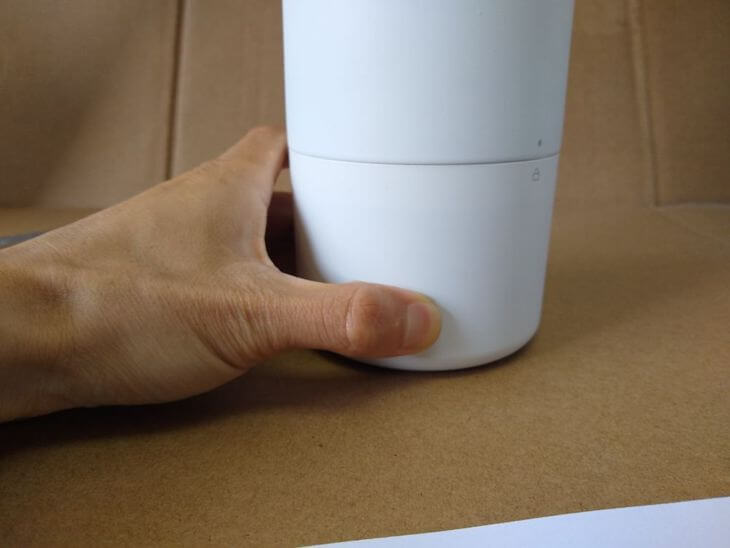
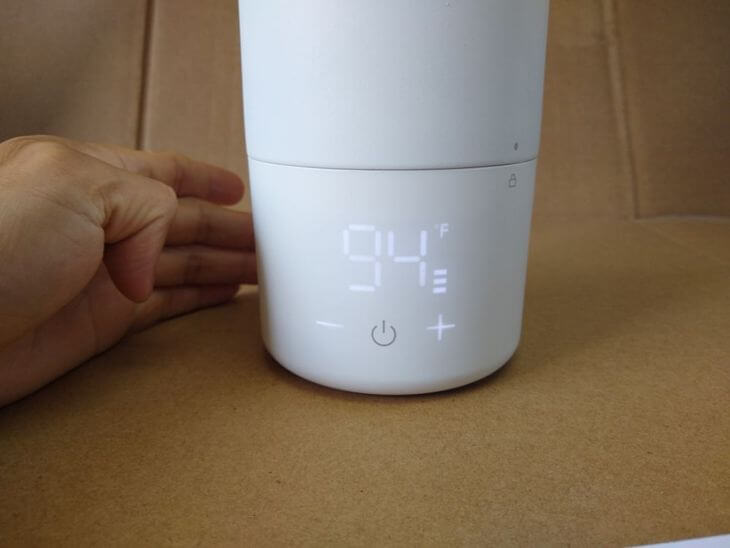
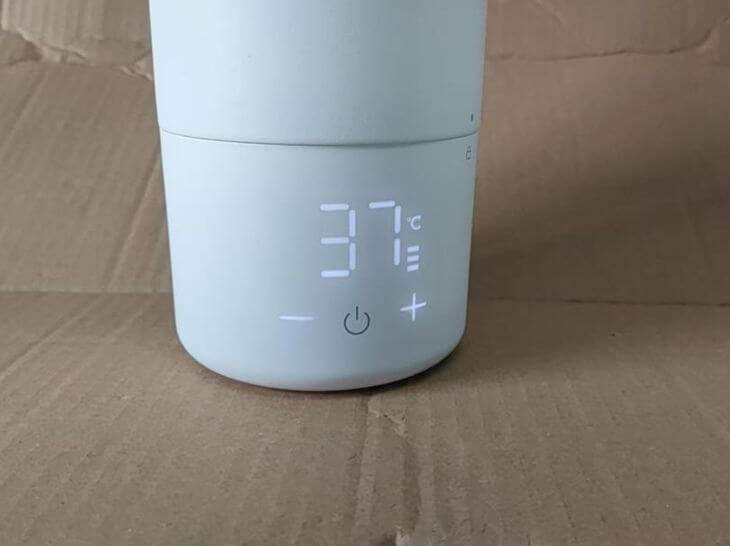
Case 1: Portable Heating Cup — IC Programming Error Caught at DPI
A client ordered a premium portable heating cup, with specs explicitly requiring the temperature display in Fahrenheit. The packaging was intricate — color box, inner tray, manual, charging cable — all single-use and destroyed once opened. That's precisely why the client insisted on a mid-production inspection: a final inspection could never open enough samples to verify internal function.
During the DPI, our inspector pressed the power button and found two temperature systems running on the same line — some units displaying Fahrenheit, others Celsius. The root cause: the factory had flashed two different firmware versions onto the IC boards. With production only about 40% complete, the factory stopped the line, reflashed the correct firmware, and the packaging line was never affected.
Had this reached PSI, the options would have been: open large numbers of single-use packages for destructive testing, or ship the entire batch on wrong firmware. Neither version of that story ends cheaply.
Case 2: Fabric Weight Mismatch — Material Substitution Caught at DPI
The client's tech pack was explicit: mesh at 100 GSM, body fabric at 140 GSM, lining at 150 GSM. During the DPI, our inspector pulled fabric straight off the production line and weighed it on the spot. Everything came in below spec: mesh at 80 GSM, body at 110 GSM, lining at 140 GSM — every single item one grade lighter than ordered.
A weight difference like this is nearly invisible on the finished garment — but it directly determines durability and hand feel. With production only about 30% complete, the factory could still return the unused material and source compliant fabric. At PSI, the goods would have been fully sewn, and there would have been no way to replace the fabric at all.
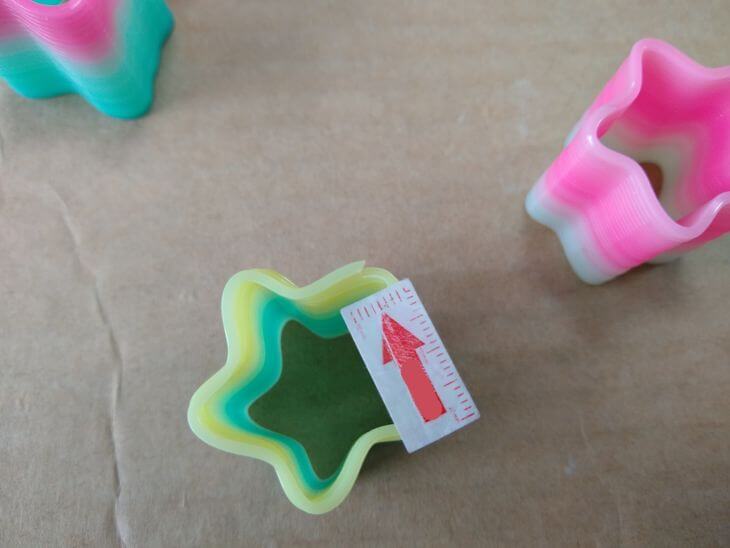
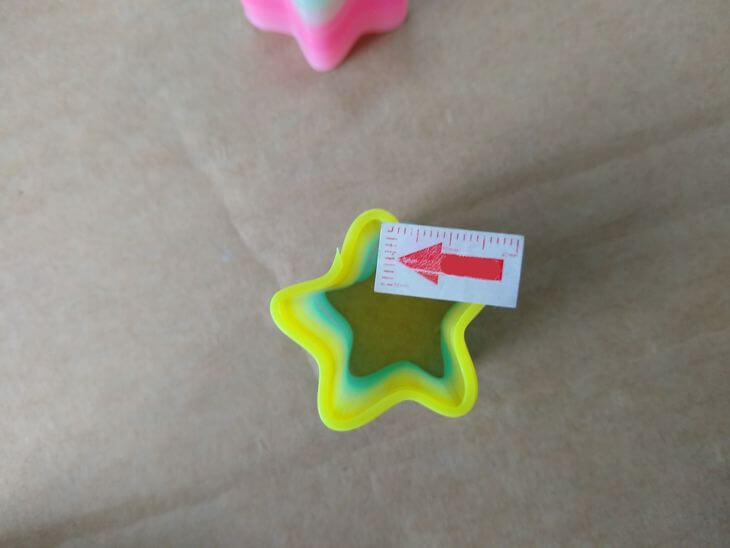
Case 3: Mini Rainbow Spring — The Cost of Skipping DPI
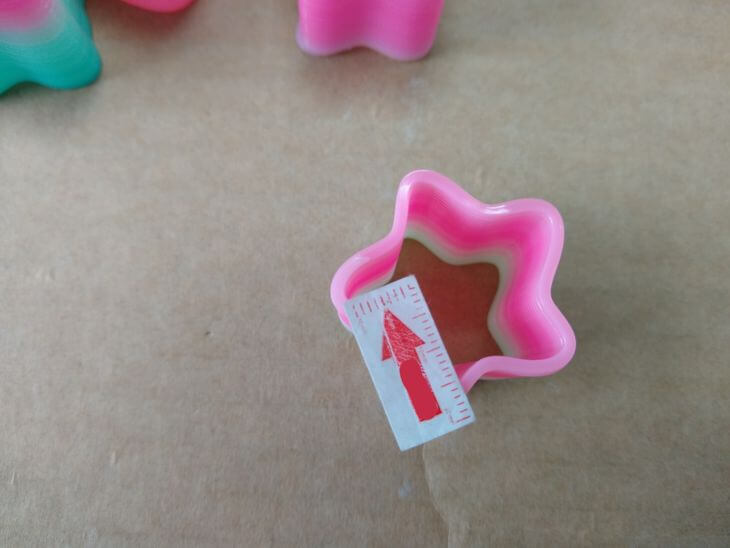
This children's rainbow spring toy is cut one by one from a single long coil. The factory used an angled cut, which left a sharp point at every cut edge. The problem was only discovered at final inspection — the entire batch had to be trimmed by hand, unit by unit, and the shipment missed its sailing date.
With a DPI, this would have been caught within the first 20% of production. The fix was trivial: adjust the angle of the cutting blade, and the sharp points never appear. Zero rework cost. Zero delay.
This is the fundamental difference between DPI and PSI: the same defect, found at a different time, costs a completely different amount.
Frequently Asked Questions About DPI
The common range is 20–50%. Below 20%, there isn't enough product to sample meaningfully. Above 50%, you're drifting into PSI territory — too late to fix much without significant rework. The exact percentage depends on your product and process.
The inspector will report the actual progress to you immediately — that alone is a valuable early warning on capacity. If the sample size can't support statistically meaningful ANSI/ASQ Z1.4 results, we'll recommend rescheduling rather than issuing a report with no reference value. A serious lag in progress is itself something you need to know about.
It follows the same AQL table as any other inspection. If 2,000 units are ready at the time of inspection, the sample size is determined by ANSI/ASQ Z1.4 General Level II for a lot of 2,000 — smaller than the sample you'd draw from the full 10,000-unit order at PSI.
No. DPI looks at the process and early output; PSI looks at the final product before shipping. They serve different purposes and aren't interchangeable. Many buyers use DPI for risk monitoring while still running PSI on every shipment.
Factory QC works for the factory. Their job is to keep production moving and protect the factory's interests. A third-party DPI gives you independent verification at the mid-point — before problems become irreversible.
No. The inspector samples and checks alongside the line — the factory doesn't need to stop production. The whole process usually fits within one working day; the factory only needs to provide samples, workspace, and relevant production records.
The "estimated daily output" in the report is the key early warning. Many factories reassure buyers verbally — "no problem, on schedule" — but the actual output rate on the line doesn't lie. A DPI measures real daily capacity on the spot, giving you a two-to-three-week heads-up if the sailing date is at risk. That's time to adjust freight bookings, communicate with your downstream customer, or pressure the factory to accelerate.