What Is Initial Production Check (IPC)?
Initial Production Check (IPC), also known as Pre-Production Inspection (PPI), is a thorough quality assessment conducted after supplier evaluation is complete and right before mass production begins. Its single mission: make sure the factory has everything right before committing full production capacity.
IPC inspects the inputs to production — raw materials, components, first-piece samples, production line condition — not the outputs. The question it answers isn't "Is this batch good?" but rather "Is this factory ready to produce a good batch?"
From our project records, this is the step most importers skip — yet it delivers the single highest ROI in the entire quality control chain. An IPC typically costs less than 0.1% of the order value, but the problems it prevents can turn into full-batch rejections at the pre-shipment inspection stage.
"Factories say 'no problem' all the time. Our inspectors have repeatedly found at IPC that the raw materials, colors, and even product construction don't match the approval sample." — This isn't about factories lying. It's about the massive information gap between their definition of "no problem" and yours. IPC is the bridge.
The Economic Case — What One IPC Saves You Downstream
The logic is straightforward: IPC finds issues → factory adjusts materials and processes immediately → defect rates at subsequent DPI (During Production Inspection) and PSI (Pre-Shipment Inspection) drop dramatically.
From our project records, orders without an IPC show defect rates at the DPI stage that are approximately 3–5 times higher than orders that had one. The gap is widest in functional and assembly-related defects — precisely the categories that are most expensive to fix once production is underway.
Why? Because IPC forces the factory to clarify standards on Day One. Without it, factories tend to produce a batch based on their own interpretation, only to discover discrepancies at the first inspection — that's called "batch drift." IPC eliminates the possibility of batch drift before the first unit comes off the line.
A Side-by-Side Comparison
| Metric | Without IPC | With IPC |
|---|---|---|
| Average DPI Major Defect Rate | 3–5× higher | Baseline |
| PSI Batch Rejection Probability | Significantly higher | Substantially reduced |
| Mass Production Rework Cost | High (fully borne) | Minimal (corrected early) |
| Shipment Delay Risk | Moderate–High | Low |
Decision Framework — When IPC Is Non-Negotiable
IPC isn't just for "new products." Here are five scenarios where skipping IPC carries risks far exceeding its cost:
- New factory — No matter the order size, first understand the workshop's real capability and QC workflow
- New materials — The supplier switched to off-spec or recycled materials, or it's your first time using a specific material
- New process — First time replacing manual assembly with automation, or using new molds/tooling
- Post-long-break restart — After Chinese New Year, post-pandemic restart, or any extended shutdown; worker turnover and idle equipment are real risks
- High-stakes clients — Zero-tolerance or premium retail orders where a single quality incident damages brand reputation
The core logic is the same across all five: whenever there's a gap between the factory's "known state" and your "expected state," IPC is the most efficient tool to close it.
The Hidden Link Between IPC and AQL Sampling
IPC's scope — raw materials, first-piece samples, production line readiness — doesn't involve AQL statistical sampling. AQL is designed for finished goods, not raw materials. But there's a causal chain most importers overlook: material defects missed at IPC become Major defects in the AQL sample at PSI.
A concrete example: a TPR toy order where the factory uses the wrong color formula. If IPC catches this, the fix is swapping raw materials and adjusting pigment ratios — a few hundred dollars. If IPC is skipped and 50,000 units are produced, the color deviation becomes a Major defect under AQL sampling at PSI — batch rejection.
In one line: IPC cuts off defects at the source — before AQL ever comes into play. It doesn't replace AQL. It makes your AQL results look better. If you want to understand how AQL sampling actually works, read our ANSI/ASQ Z1.4 (ISO 2859-1) AQL Sampling Inspection Guide and use the online AQL sampling calculator to find your required sample size.
What We Check During an Initial Production Check
Our qualified engineers perform IPC according to standardized protocols and domain expertise, covering all of the following. This is not sampling — it's a systematic audit of production readiness:
- Raw materials & components — Verify specs, colors, and materials against approval samples; check storage conditions; spot-test key components for function and appearance
- Production lines & capability — Confirm line layout, equipment condition, and whether actual capacity meets the production schedule
- First-piece & semi-finished products — Full-dimensional inspection of initial off-line samples to ensure the batch's "starting point" is correct
- Facilities & equipment — Verify molds, gauges, and testing equipment are within calibration and in good condition
- Environment — Check temperature, humidity, cleanliness, and zoning compliance (especially for electronics, medical, or food-contact products)
- Standard comprehension check — On-site communication with factory management, QC staff, and line supervisors to verify everyone understands the client's quality requirements and purchase specifications the same way. Misaligned understanding leads to misaligned production.
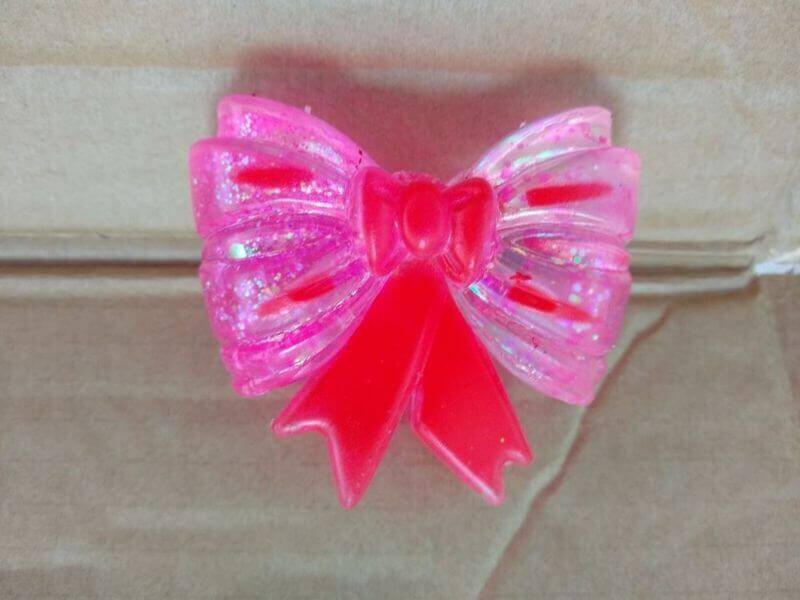
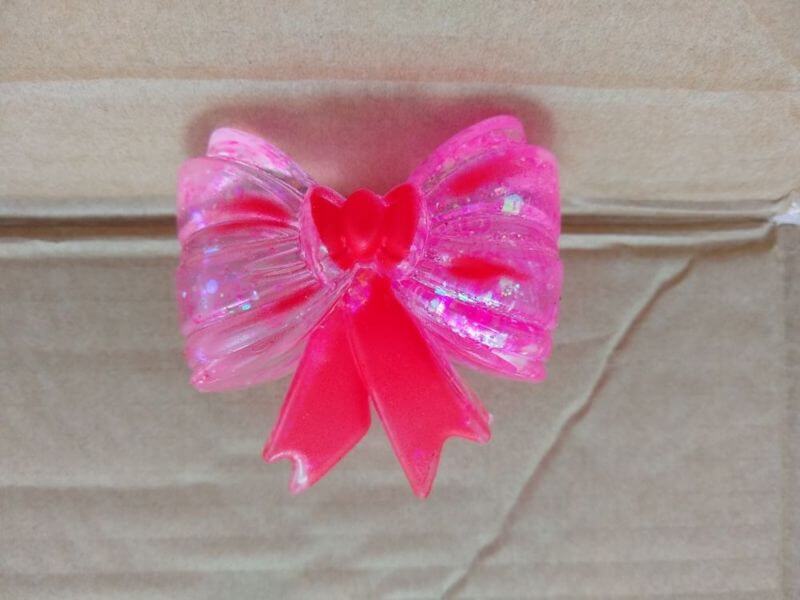
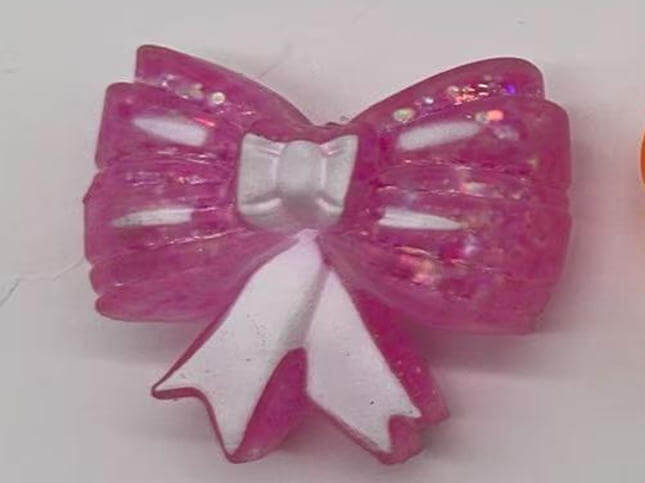
Real Case 1: TPR Toy Squishy Bowtie — Wrong Color, Entire Batch Nearly Scrapped
A European promotional product importer ordered 80,000 TPR toys bowtie-shaped squishy for a major retail brand's summer campaign. The product required a specific Pantone-matched orange to align with the brand's visual identity. The factory's approval sample used the correct color — but during the pre-production IPC, our inspector caught a critical problem.
What IPC Uncovered
During production line readiness review, the inspector found the factory's pre-mixed TPR raw material was visibly different from the approval sample. The factory's color technician had — without notifying the client — reduced the orange pigment ratio by roughly 30%, reasoning that "the color will darken after curing, it looks about the same." The first trial samples already deviated beyond the client's tolerance against the Pantone reference.
What Would Have Happened Without IPC
If all 80,000 units had been produced before the color issue was discovered: the entire batch would be unusable for the brand's summer campaign (color mismatch with brand VI). The client would face two choices — scrap everything and re-produce (material + tooling + time cost, estimated six figures in RMB), or liquidate at deep discount to channels that don't care about color (severely damaging the importer's client relationship).
Outcome After IPC
The same day the IPC report was issued, the factory remixed the raw material to the correct formula. New first-piece samples were approved by the client, and the full batch proceeded without incident. The IPC cost less than $200 — and prevented a potential loss in the tens of thousands of dollars.
On-Site Images
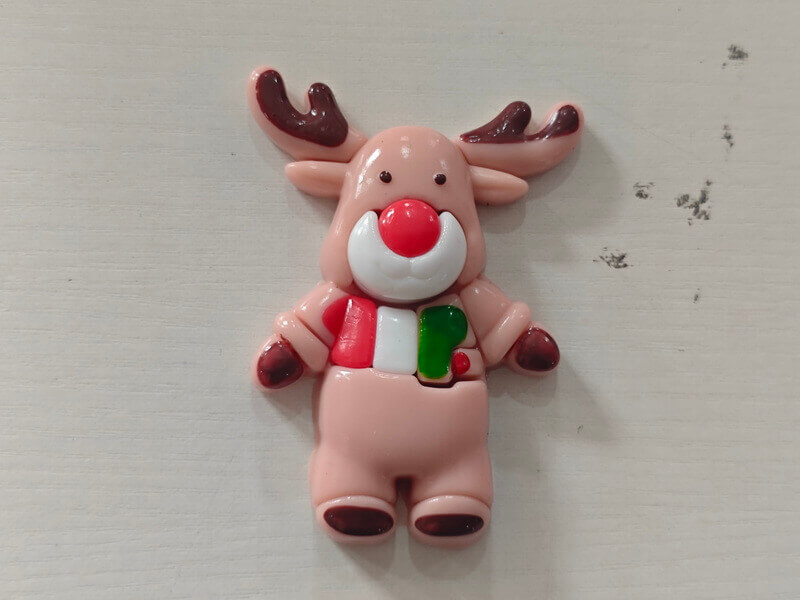
Real Case 2: TPR Toy Squishy Deer — Wrong Paint Type, Pattern Peels Off Instantly
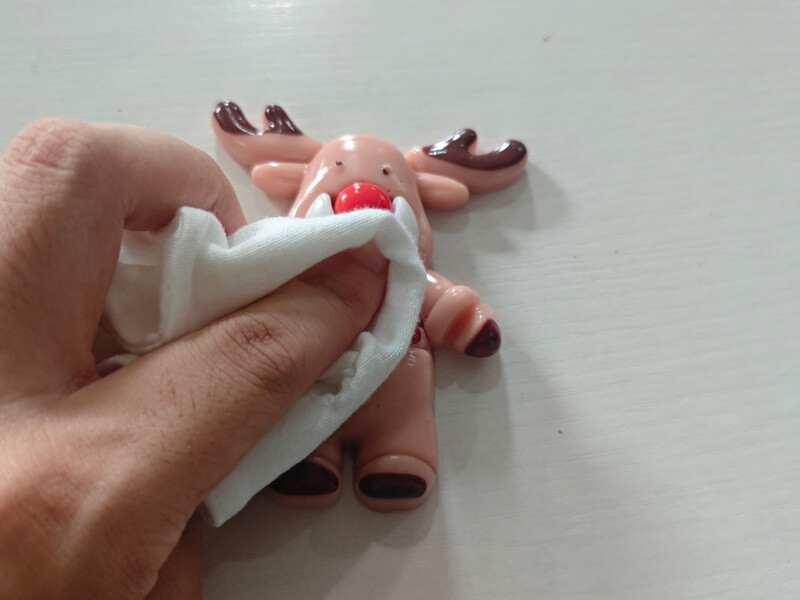
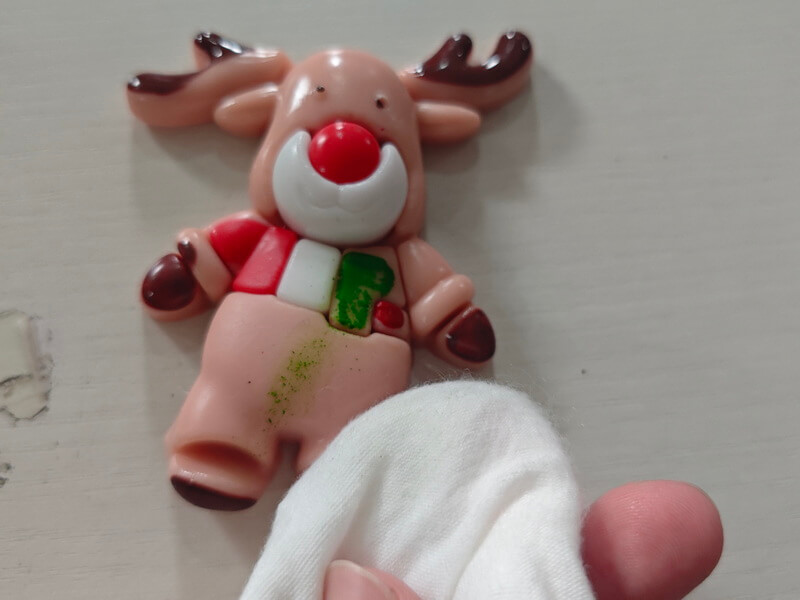
A US gift importer ordered 35,000 TPR deer-shaped squishy toys with a printed brand mascot pattern on the surface. Positioned as a children's gift item, the product had strict requirements for coating adhesion and durability. The factory claimed "printing is fine, we use the same ink as always." A simple test during IPC exposed a fatal flaw.
What IPC Uncovered
After receiving the first trial-print samples, the inspector performed a tape adhesion test (cross-cut tape test) — a standard check for printed TPR toys. The printed pattern peeled off in large patches. Further investigation revealed the factory had — to cut costs — switched from the client-specified TPR-specific flexible ink to ordinary PVC ink. Standard PVC ink has extremely poor adhesion on TPR surfaces — it rubs off with minimal contact.
What Would Have Happened Without IPC
If all 35,000 units had been fully printed before this was caught: the best-case scenario was complete rework — solvent-strip the wrong ink and reprint (extremely difficult on TPR, and solvents can damage the material). The worst case: scrap the entire batch, and the client faces major compensation claims from retailers — coating failure on a children's gift item is a safety defect that could trigger a CPSIA recall.
The root cause here — unauthorized material substitution — is something a factory audit in China could have flagged at the supplier selection stage. IPC catches the specific problem on this order; a factory audit helps you avoid suppliers with systemic material control issues. Together, they form your complete quality control chain.
Outcome After IPC
After the IPC report flagged the ink issue, the client required the factory to use the specified TPR-specific flexible ink at the original price (no price increase allowed — the factory was in violation first). With the correct ink, re-trial samples passed adhesion testing, and full production proceeded without further issues. The IPC cost less than $200 — and prevented a potential recall and six-figure compensation.
On-Site Images
Transparent Pricing — What Does IPC Cost?
Our initial production check service uses a per-man-day pricing model. A standard IPC typically requires just 1 man-day — unless the product is exceptionally complex or the factory is unusually large.
Our IPC service fee is $188 per test. Because potential downtime or rejection costs vary by product and market, we leave it to your team to assess your risks and determine if this service adds value to your process.
If you are not sure, free to contact us for a custom IPC consulting — tell us your product type, order quantity, and factory location, and we typically respond within 12 hours.>
Why Choose CNQ for Initial Production Check?
The value of an IPC depends entirely on the inspector's experience and judgment — not everyone can tell the difference between "looks close enough" and "genuinely off-spec." Here's what sets China Quality Service IPC apart:
Standard Comprehension — Core of IPC
IPC isn't just about checking things — it's about ensuring factory management, QC staff, and line supervisors share a unified understanding of your quality standards. Our inspectors conduct structured "standard alignment meetings" with the factory, walking through product specifications and defect definitions one by one. This is the biggest difference between IPC and PSI — PSI validates results, IPC aligns processes.
24-Hour Inspection Report
Full English IPC report delivered the same day the inspection finishes — including raw material condition photos, first-piece evaluation, production line readiness, and all issues found. No waiting for reports, no production delays.
End-to-End Coverage — Materials to Line
CNQ IPC services not only spot-check first pieces, but covers raw materials + first pieces + production line + environment + factory comprehension, five dimensions in one inspection. Because a problem in any single dimension can compromise the entire batch.
17+ Years on the Ground
Operating in China since 2009. We've seen virtually every flavor of IPC problem — from TPR pigment mix-ups to electronic component batch contamination. Experience tells you where to look, what to double-check, and what questions to push the factory on.
Let CNQ Be Your First Line of Defense Before Mass Production
In the China supply chain, the earlier you catch a problem, the less it costs. One IPC costs under $200 — but the losses it prevents — wrong colors, wrong materials, wrong processes — can run into the tens or hundreds of thousands of dollars. Our product inspection services in Chinacover the full chain from pre-production to pre-shipment. We also recommend combining IPC with a factory audit — IPC solves "how to make this batch right," while a factory audit solves "is this supplier worth a long-term partnership."
- Lock in materials and processes — before mass production begins, verify raw materials, pigments, and tooling all match your specs
- Align standard comprehension — ensure factory management, QC, and line supervisors all understand your quality requirements the same way, leaving no room for batch drift
- Reduce downstream inspection defect rates — a well-executed IPC means higher pass rates at DPI and PSI, saving you the hidden costs of rework, returns, and claims
Ready to arrange an IPC for your next order? Get your CNQ experts — tell them what you need, and you will receive a plan and quote within 12 hours.
Not sure if your order needs IPC? Try our AQL sampling calculator to understand sampling logic at the shipment stage, or simply reach out for a free recommendation. You can also download a sample inspection report to see the format and level of detail you will receive.