
Factory Social compliance requirements have become a core part of cross-border sourcing. Retail brands, marketplaces and ESG regulations now demand evidence of ethical working conditions, and the consequences of a labor violation surfacing inside your supply chain — reputational damage, order holds, contract termination — are severe.
Yet many buyers fall into certificate-driven thinking: once a BSCI, SMETA or SA8000 document is on file, the factory is treated as permanently cleared. That is where blind risk starts. A certificate or audit report is a snapshot of one audit window, not a standing guarantee of real-world factory-floor performance. This guide explains what each major framework actually covers, where reports structurally cannot reach, and how importers can verify the gap between the paper and the floor with a third-pary inspection company.
Category Risk Profiles and Common Floor Gaps
Social audit frameworks are generic by design — they do not account for category-specific blind spots we repeatedly observe during thousands of on-site quality control inspections across China. Each product category has its own known failure modes:
- Leather goods and bags: high risk of off-site stitching subcontracting, home-based piecework, extended night shifts, and unregistered small accessory workshops.
- Toys and novelties: beading, assembly and gift packaging are frequently outsourced to rural home workers, creating elevated child-labor monitoring gaps.
- Apparel and textiles: separated cutting subcontractors, independent washing plants, overcrowded dormitories, and unlawful utility deductions from worker wages.
- Metal and injection-moulded parts: night-shift production, high-temperature workshops, unreported polishing subcontractors, and missing workplace injury insurance.
- Small home appliances: outsourced SMT and plug-in assembly, with large pools of seasonal temporary staff not fully documented on official payroll records.
No single audit protocol is tuned to catch these category-specific failure modes. Cross-verification during batch-by-batch production visits is what flags them between formal audit cycles.
Beyond the category patterns, the same handful of gaps resurfaces on factory floors regardless of product type — and these are the ones an audit report is least likely to capture.
Based on thousands of supplier-site verification across China, our teams repeatedly encounter gaps between official reports and day-to-day operations. These are not accusations against every factory — they are known scenarios importers should watch for:
- Pre-audit coaching and rehearsal: with announced audits, workers may be coached on interview answers, and attendance and payroll records get temporarily adjusted for the audit window.
- Dual-set attendance records: one set of timecards and payslips prepared for auditors, while separate internal records track actual overtime hours.
- Temporary-worker exclusion: seasonal or outsourced staff perform large portions of production work yet sit outside the audit's official scope.
- Worker-interview loopholes: management may remain nearby during supposedly private interviews, or only pre-cooperative employees are selected to speak with auditors.
- Seasonal performance drift: an factory audit completed in low season may show compliant hours; serious overtime violations can appear later, during peak-order production.
No audit format eliminates every one of these risks completely. Understanding them is what allows you to read a report with appropriate caution.
Factory Audit Modes: How Much Notice the Factory Gets
The timing of an audit strongly shapes what evidence it can collect — and each mode carries a real trade-off:
Announced Audit
The factory receives firm advance notice of the audit date.
- Advantage: full documentation and key personnel are reliably present — useful for initial supplier screening.
- Cost: maximum opportunity for the factory to prepare and stage conditions.
Semi-Unannounced (Semi-Surprise) Audit
The factory is told the audit will occur within a defined calendar window, without disclosing the exact visit date.
- Advantage: a balanced compromise widely used by mature global brands — it reduces pre-audit rehearsal risk while still allowing basic operational readiness.
Fully Unannounced (Surprise) Audit
No advance warning is given to the site.
- Advantage: the highest likelihood of observing day-to-day real-world conditions.
- Cost: the site may be closed, key staff absent or documents unavailable; the assessment may be incomplete, and the overall project cost is higher.
What a “Passing” Report Actually Proves — and What It Cannot
Many importers treat a favorable BSCI grade, SMETA report or even an SA8000 certificate as definitive proof of permanent ethical working conditions. This is a dangerous simplification. All social compliance audits deliver a time-limited snapshot assessment, not an unconditional guarantee of day-to-day reality — and even formally compliant reports contain structural blind spots buyers must understand before placing orders.
1. Documents May Diverge from Operational Data
One of the most frequently observed risks across China manufacturing is dual-set payroll and attendance records. Even with digital-record requirements now in force, factories can still produce sanitized electronic datasets for auditors, separate from the internal data used for daily production. A good audit grade does not automatically confirm that the records reviewed reflect normal-season production weeks. Wage-hour mismatches are a critical red flag even after a corrective-action plan has been submitted.
2. Worker Interviews Can Be Compromised
Factories know that confidential worker interviews form core audit evidence. Pre-audit coaching, scripted answers and selective worker selection are well-documented phenomena in consumer-goods supply chains. For buyers, the most meaningful signal is not simply that interviews were completed, but whether worker testimony is consistent with payroll and timekeeping records. A mismatch is far more informative than uniformly clean interview feedback.
3. Undisclosed Subcontracting Sits Outside Audit Scope
A social compliance audit validates only the physical site visited by auditors. When order volumes spike, production may shift to tier-2 subcontract workshops that were never inspected. Even a perfectly clean report for the main plant offers zero visibility into unauthorized subcontractors — and that is frequently where the most serious labor violations occur. The practical mitigation is a written PO-level obligation requiring disclosure of every production facility involved in your goods.
4. The Home-Worker Blind Spot
In apparel, toys and gifts, factories frequently outsource manual tasks — thread trimming, beading, final packaging — to rural households during peak season. This is home-working, or cottage-industry outsourcing. No social auditor can audit a village household, which makes this a major blind spot for both child-labor and minimum-wage violations.
How to detect it? Look at the outbound volume. If the factory's declared capacity is 10,000 units but inbound raw-material records show components for 15,000, the extra 5,000 are being made somewhere else — likely in homes no auditor will ever visit.
5. The "Comprehensive Working Hours" Loophole
Buyers often ask how a factory can pass a BSCI audit while still running 11-hour shifts. The answer frequently lies in the Comprehensive Working Hours System: Chinese labor law permits factories to apply for special approval to calculate average working hours over a month, quarter or year rather than daily. Factories use this to schedule extreme overtime legally in peak season and shorter hours off-season. A social audit may see a compliant average on paper, but it will not tell you whether workers were physically exhausted during the three months preceding your shipment. Buyers should request the official approval document for the factory's working-hour system and cross-check it against actual peak-season clock-in data.
Industry context: as discussed in public APSCA-amfori industry roundtables, social compliance audits are sampling-based compliance reviews, not full forensic investigations. Limited on-site time, evidence-access constraints and scope boundaries create hard practical limits to what even high-quality third-party audits can uncover.
The Frameworks Compared: BSCI, SMETA, SA8000, WRAP, C-TPAT and Disney FAMA
amfori BSCI — Scope, Ratings and Recognition
amfori BSCI is a widely adopted social audit framework originating in European-market sourcing.
- Scope: 13 defined performance areas including working hours, wages, child-labor prevention, health and safety, discrimination, and environmental compliance elements. It produces an audit report, not a product or site certificate.
- Rating system: grades run A (Very Good) through B (Good), C (Acceptable), D (Insufficient) to E (Unacceptable); zero-tolerance violations may trigger ZT status.
- Validity rules: A and B ratings are valid for two-year cycles; C and D ratings require corrective-action plans plus follow-up audits within months.
- Recognition: primarily amfori-member European retailers and importers; not universally accepted by US-based brand programs such as Disney FAMA.
Important note: BSCI results are shared on the amfori platform, but a good rating does not eliminate the risk of operational drift after the audit date. Under 2026 rules, announced audits have been eliminated — only semi-announced and fully unannounced audits are permitted — digital attendance and payroll records are mandatory, hand-written records are no longer accepted, and labor-related criteria carry 45% of total scoring weight.
How the grade is actually produced. amfori does not reduce a factory to a single pass-or-fail judgement. Each performance area is assessed separately, the areas are weighted — labour-related criteria carry the largest share — and the totals map onto the A to E band. A zero-tolerance finding is recorded as its own flag rather than averaged away: a site can accumulate respectable area scores and still be blocked for buyer acceptance because of one falsified record set or one under-age worker on the floor.
The audit cycle in practice. An A or B grade moves the site onto a two-year re-audit rhythm. A C grade returns it to an annual audit with a corrective-action file left open on the platform. A D grade normally triggers a follow-up audit within three to six months, and members are expected to hold new orders until that follow-up closes. An E grade is read as a disengagement signal: the member must either see verified remediation or move the order elsewhere.
Validity and buyer acceptance are two different clocks. The report stays retrievable on the amfori platform for its full validity period, but European members frequently refuse anything older than twelve months when onboarding a new supplier, and several require the audit date to fall inside the current contract year. Always check the audit date against the buyer's onboarding rule, not against the platform statement.
What gets a BSCI report rejected. In our experience the causes are usually administrative rather than ethical: the audited legal entity differs from the entity named on the purchase order; the audit was executed by a firm outside amfori's recognised auditor pool; production subcontractors are not declared inside the audit scope; corrective actions are closed by written statement with no payroll or photographic evidence; or the report was already near expiry when the order was placed.
Sedex and SMETA — 2-Pillar vs 4-Pillar
Sedex is a member-based ethical-data-sharing platform; SMETA is the on-site audit methodology used within Sedex workflows.
- SMETA 2-pillar: mandatory core modules of Labor Standards plus Health and Safety, with a lightweight preliminary environmental review. Commonly used for baseline ethical screening.
- SMETA 4-pillar: everything in 2-pillar plus a full-scope environmental assessment and business-ethics modules (anti-bribery, conflict of interest). Major global retailers often require this variant.
BSCI vs SMETA in one line: BSCI is tied to the amfori member community with its A–E grading scheme; SMETA produces descriptive findings without a single pass-fail grade, and reports upload to the Sedex platform where they can be shared across multiple buyers. SMETA enjoys broad acceptance for UK, Australian and multi-market sourcing.
Distinguish carefully: the Sedex SAQ (self-assessment questionnaire) is a factory-completed form, not equivalent to an on-site SMETA audit. As of 2026, SMETA 7.0 is mandatory for all new full audits, announced audits have been removed, and semi-announced audits use a minimum 21-day window. The Sedex platform lists reports as valid for 24 months, yet many retail buyers enforce a stricter 12-month expiry for supplier approval.
The audit cycle in practice. Most Sedex members work an annual SMETA cadence regardless of the platform's 24-month statement, because their supplier codes require a report dated inside the current approval year. A site that changes ownership, relocates, or adds a production building is normally treated as a new site and audited again rather than updated in place.
Why 2-pillar is not a cheaper 4-pillar. The 2-pillar option drops the environmental and business-ethics modules outright — it does not sample them. If your buyer's code of conduct contains anti-bribery, conflict-of-interest or emissions clauses, a 2-pillar report leaves those areas with no evidence at all. That is a scope gap, not a finding you can close later with a corrective action.
What gets a SMETA report rejected. The most frequent failure is not the audit content but the link: a report that is not uploaded and connected to the correct Sedex Site ID is invisible to the buyer, and strong findings will not compensate. Beyond linkage problems, buyers reject reports executed by a company that is not a Sedex-affiliated audit firm, new full audits still issued against an older SMETA version, a 2-pillar submission where the buyer's code requires 4-pillar, a report covering a sister plant rather than the site producing the order, and non-conformities logged with no corrective-action evidence attached.
SA8000 — Certification, Not Just an Audit
SA8000 is a third-party-certifiable social accountability management-system standard created by Social Accountability International (SAI).
- Audit vs certification: an SA8000-style assessment generates findings; SA8000 certification requires passing both a Stage-1 readiness review and a full Stage-2 on-site audit, then ongoing surveillance audits, to earn an official certificate.
- Validity: a three-year certificate lifecycle with mandatory surveillance audits during the cycle, normally twice per three-year window; re-certification must occur before expiry.
- Who uses it: demanding global brands and tender-based procurement — one of the more rigorous social-system frameworks available for manufacturing-site assessment.
The certification path, step by step. SA8000 is earned in stages, and that sequence explains why it takes far longer than a single audit: application plus management-system documentation, a Stage 1 readiness assessment that tests whether the system is mature enough to audit, a Stage 2 full on-site audit across all clauses and all shifts, and certificate issuance by a certification body accredited for SA8000. Surveillance audits then run inside the three-year window — and a missed surveillance or an unresolved major non-conformity can suspend the certificate mid-cycle, which matters when your buyer checks validity at onboarding.
What gets a certificate rejected. Buyers and tender committees check the document itself, not the logo: whether the issuing body holds SAAS accreditation, whether the certificate names the exact legal entity and production site on the order, whether it is currently valid rather than suspended, and whether the stated scope covers the product line you are sourcing. A certificate issued to a sister facility, or one that expired while the site kept quoting it, is one of the most common documentation failures we encounter during supplier onboarding.
WRAP and C-TPAT — Two Different Jobs
- WRAP: a primarily textile-and-apparel ethical certification program, widely used by garment factories supplying North American retailers. It covers labor, health and safety, and customs-security elements. From 1 March 2026 the old Platinum/Gold tier system has been discontinued; newly issued certificates are valid for one year only, while legacy Platinum certificates remain valid until their original expiry.
- C-TPAT: the Customs-Trade Partnership Against Terrorism is a US border-security program, not a social-labor audit. It assesses supply-chain physical security, container-seal handling, personnel-access control and IT-data security for goods entering the USA. It does not evaluate wage-and-hour or worker-rights performance.
Disney FAMA — Brand Authorization, Not a Generic Audit
Disney's ILS (International Labor Standards) program is a brand-specific factory-authorization regime. FAMA (Facility and Merchandise Authorization) is the formal approval granting a given factory permission to manufacture Disney-branded goods.
- FAMA is not a generic audit report; it is Disney's own facility-production authorization. Holding BSCI or SMETA reports does not automatically grant Disney production rights.
- Every manufacturing and critical subcontractor facility making Disney-branded goods must individually apply for FAMA authorization, and valid ILS-program audit evidence must be submitted before approval.
- FAMA has a limited validity window and must be renewed; new-build or relocated factories face additional record-availability requirements.
- Subcontractor oversight is strictly enforced: hidden subcontracting without disclosure is a major violation that can result in immediate withdrawal of FAMA status.
From 2026 onward, Disney mandates SMETA 4-pillar audits, accepts reports only from a short list of approved providers, and — from 1 October 2026 — requires audits inside a minimum 90-day unannounced window. ILS report validity has been reduced to six months, while the FAMA authorization itself remains valid for three years subject to annual review.
How authorization is actually obtained. FAMA is not something a factory can buy from an audit company. The facility is disclosed to Disney, an ILS audit is carried out by a provider on Disney's approved roster, the findings are closed, and the FAMA letter is then issued for that specific facility. The licensee placing the order must additionally connect that facility to its own authorization — a valid FAMA held by a factory that has never been introduced through your program does not grant your order production rights.
Why authorizations get withdrawn. The failure modes are specific rather than theoretical: goods produced in a facility with no FAMA at all, undisclosed subcontracting to a second workshop, obstruction when Disney exercises the unannounced window, an ILS audit from a provider outside the approved list, an ILS report that expired before the shipment date, and unresolved zero-tolerance findings. Any single one can stop production for an entire product line, which is why FAMA status belongs in your order-placement checks, not in your shipment-date checks.
Brand-Specific Overlays: Same Standard, Different Acceptance Rules
A valid SMETA, BSCI or SA8000 report does not automatically satisfy your buyer's internal compliance rules, even when the audit scheme matches their requirement. These commercial rules are rarely stated in official standard documentation:
- Continental European mass-market retailers: often accept the scheme's default validity window (24 months for BSCI and Sedex).
- UK, Australian and many APAC importers: enforce a stricter 12-month expiry for supplier onboarding, regardless of platform-stated validity.
- US consumer brands (excluding Disney): require supplementary UFLPA traceability records; a social audit serves only as supporting evidence for forced-labor due diligence.
- Disney ILS / FAMA: mandatory SMETA 4-pillar, restricted auditor roster, six-month ILS report validity and a minimum 90-day unannounced audit window.
Before commissioning an audit, confirm not only the audit type but the buyer's bespoke validity, scope, auditor and subcontractor-disclosure requirements.
Comparison Table — Major Social Compliance Frameworks (2026)
| Framework | Nature & output | Key 2026 changes | Major target markets | Critical limitation for buyers |
|---|---|---|---|---|
| amfori BSCI | Monitoring program; graded A–E audit report on the amfori platform (not a physical certificate) | No announced audits; digital payroll and attendance mandatory; labor criteria weighted 45% | EU continental importers | Grade does not guarantee the audited site is your production location; snapshot only |
| SMETA 2-pillar | Audit methodology; report and CAPA uploaded to Sedex; no pass-fail grade | SMETA 7.0 mandatory for new full audits; no announced audits; 21-day minimum semi-unannounced window | UK, Australia, baseline global screening | Platform-stated validity differs from buyer acceptance rules (many brands enforce 12 months) |
| SMETA 4-pillar | 2-pillar plus full environmental and business-ethics modules; Sedex-shared report | Same SMETA 7.0 rules; required by many large retailers and Disney ILS from 2026 | Large global retail brands | Still cannot cover undisclosed tier-2 subcontractors |
| SA8000 | Management-system certification; site certificate plus surveillance reports | No major structural change; three-year cycle with periodic surveillance | High-requirement premium brands; public tenders | Higher cost and heavy system burden for factories; applies only to the exact certified site |
| WRAP | Apparel-focused certification program; compliance certificate | From March 2026: Platinum/Gold tiers discontinued; one-year validity certificates only | North American apparel and footwear buyers | Optimized for garment sector; less recognized outside apparel |
| C-TPAT | US customs supply-chain security assessment — not a social-labor audit | No social-labor scope; security controls only | Shipments importing into the USA | Must never substitute for a labor-standards audit |
| Disney FAMA / ILS | Brand-specific manufacturing authorization document | Mandatory SMETA 4-pillar; limited auditor pool; 6-month report validity; unannounced audits with 90-day window from October 2026 | Facilities making Disney-IP merchandise, components or packaging | Valid FAMA does not imply general social-compliance qualification for other orders |
Audit Types Compared: Social, EHS, C-TPAT and Quality-System
Before comparing frameworks, it helps to separate the audit families themselves. Four of them land on the same supplier file and get confused constantly.
These two categories are frequently confused, yet they assess fundamentally different risk domains:
- Quality-system factory audit: focuses on manufacturing capability — incoming material control, production processes, equipment maintenance, in-process and final inspection, defect handling, capacity, traceability, product-conformance management. The goal is whether the factory can reliably manufacture goods matching your specification.
- Social compliance audit: focuses on people-related workplace risk — wages, overtime limits, child-labor prevention, health and safety, worker-interview evidence, anti-discrimination, business ethics. The goal is whether workplace conditions comply with labor codes or brand codes of conduct.
They may share document-review and site-walkthrough steps, but their evaluation criteria, risk focus and output are separate. Many importers need both assessments for new-supplier qualification — see our China factory audit service for the quality and EHS side.
The matrix below sets out how the four audit families differ in objective, primary focus, deliverable and the limitation that matters most when you read the report.
| Audit type | Core objective | Primary focus | Typical deliverable | Key limitation |
|---|---|---|---|---|
| Social compliance (BSCI / SMETA / SA8000) | Verify ethical labor conditions | Wages, overtime, child labor, discrimination, worker interviews, working hours | Graded report / CAPA / accredited certificate | Snapshot assessment; undisclosed subcontractors and home work out of scope unless pre-defined |
| EHS audit | Validate environmental, health and safety controls | Fire safety, machine guarding, chemical handling, waste, ventilation, PPE | Non-conformity report plus corrective action plan | Does not assess wage, overtime or labor-rights compliance |
| C-TPAT | US customs supply-chain security | Cargo security, container seals, access control, IT security | C-TPAT validation letter | Not a labor audit; security controls do not imply ethical labor practices |
| Quality-system factory audit | Confirm manufacturing capability and consistency | Incoming QC, process control, maintenance, defect handling, traceability, capacity | Factory capability assessment report | Does not evaluate labor standards, payroll or social-compliance requirements |
Which Factory Audit Requires? Misconceptions to Clear First
Unlike a standard third-party inspection (such as a pre-shipment AQL inspection, which follows a unified, globally recognized sampling standard), a factory audit operates within a fragmented landscape of platforms, methodologies, brand-specific programs, and certificates.
In contrast, product inspection outcomes are judged against item specifications and sampling limits, while audit acceptability depends entirely on the recognition rules of the relevant scheme or brand.
Sourcing teams routinely mix up platform names, audit methodologies, brand programs and certificates — which leads to rejected reports or failed brand approvals:
- Sedex is not SMETA: Sedex is a shared ethical-data platform; SMETA is the on-site audit methodology used within the Sedex workflow.
- Sedex SAQ is not an on-site SMETA audit: the Self-Assessment Questionnaire is a factory-completed form with no independent on-site verification.
- FAMA is not a general social compliance certificate: FAMA is Disney's facility authorization permit; ILS is the underlying labor-standards audit required to obtain it.
- C-TPAT is not a labor audit: it addresses anti-terrorism cargo security and has no scope for wages, overtime or worker rights.
- Announced, semi-unannounced, fully unannounced: these define advance-notice rules; semi-unannounced means the audit falls inside a disclosed window with no exact date shared.
- CAPA: a Corrective and Preventive Action plan for non-conformities — but closure does not automatically prove sustained improvement over time.
With the terminology straightened out, the practical question is not which standard is best in the abstract — it is which audit your buyer will actually accept at onboarding.
Before commissioning any social-audit work, clarify requirements directly with your buyer or brand-compliance team. Common real-world pitfalls:
- A BSCI report will not satisfy Disney FAMA requirements.
- C-TPAT addresses border security and cannot be used as a labor-rights report.
- A Sedex SAQ is paperwork completed by the factory itself, not an on-site SMETA audit.
- Even when the framework matches, confirm the required depth (SMETA 2-pillar or 4-pillar), the announced or semi-surprise rules, subcontractor-in-scope requirements and report-submission-platform rules.
Even a correct-standard report becomes useless if it refers to a sister plant instead of your actual production facility. Validate the audit date, the exact audited legal-entity name, the audit-execution mode and whether subcontractor sites fall inside the audit scope.
Beyond the Paperwork: Ghost Workers, Dormitories and Physical Clues
The "Ghost Worker" Phenomenon
One of the most persistent blind spots on the factory floor is the ghost worker scenario. When auditors are scheduled, temporary and seasonal workers are often escorted off-site or told to stay in dormitories. The payroll records shown to the auditor cover only regular staff, perfectly hiding severe overtime violations or unpaid social insurance.
Because we conduct unannounced, quality-focused site visits, we frequently observe real day-to-day conditions — including seasonal and temporary workers who do not appear on audit-period payrolls. To be clear: this is informal visual observation during quality work, not formal accredited social-audit evidence. It is why we tell buyers that an audit report shows what a factory looks like on its best day, while an independent floor presence shows what it looks like every day.
The Hidden Risk in Factory Dormitories
A production floor can be spotless while the dormitory next door is a fire trap. Social audits often skim over living conditions, yet dormitory policy is where labor violations hide:
- Forced deductions: are workers charged for utilities, water or internet at rates above local market levels?
- Freedom of movement: are workers locked inside the compound after a certain hour?
- Occupancy limits: are eight workers crammed into a room designed for four, violating fire-safety codes?
During quality inspections we often walk past dormitories. Barred windows on lower floors, or clothes hanging directly over electrical wiring, get flagged for the buyer. We cannot issue a formal social audit report from such observations — but these visual red flags are often the first clue that management style is exploitative.
Physical Clues: How Quality Issues Hint at Social Risk
A severe social compliance problem rarely exists in a vacuum; it usually manifests physically in the product. During on-site inspection we watch for signals of systemic operational chaos, which is the common root of both quality and social violations:
- Extreme fatigue errors: a sudden spike in simple assembly mistakes — upside-down labels, wrong screws — often indicates 12-hour shifts with exhausted workers, even when official clock-in records show eight hours.
- High-turnover indicators: a floor full of newly trained workers, or quality that swings between morning and afternoon, suggests high labor turnover — often a symptom of unpaid wages, poor management or unsafe conditions driving workers away.
- Unlabeled materials: raw materials without supplier tags or certificates signal not only substitution risk but possibly unapproved underground subcontractors.
Quality and social compliance are two sides of the same coin: how a factory treats its people usually determines how it treats your product.
When a Report Is Enough — and When Regulation Says It Is Not
Match the depth of verification to your risk exposure:
- Low risk (small order, low brand exposure): verify report date, legal-entity match and the major/minor non-conformities list; pair with your standard pre-shipment inspection workflow.
- Medium risk (regular mid-volume orders): request semi-unannounced audit mode, confirm the subcontractor scope definition, keep CAPA evidence on file, and consider occasional independent quality-site cross-verification.
- High risk (large volume, retail brand exposure, US forced-labor regulatory exposure): never rely on a single social report. Combine a valid accredited report, periodic on-site cross-verification of the physical factory, explicit PO clauses on subcontractor disclosure, and continuous monitoring of corrective-action closure.
Audit frequency should follow the same risk logic. High-risk categories (leather goods, complex electronics) warrant annual audits plus semi-annual spot checks and unannounced visits; medium-risk categories (basic apparel, plastic goods) an annual or biennial cycle depending on supplier history; low-risk categories (stationery, simple packaging) a desk reassessment every two years, with on-site audits triggered by complaints, ownership changes or factory relocation. The factory's compliance maturity — not just the last grade — should set the rhythm.
Regulation has also changed what “enough” means, because a social report is now read by customs officers and legal teams as well as by sourcing managers.
A social compliance report is no longer just a reputation document; it is increasingly a legal-defense document.
UFLPA (United States): under the Uyghur Forced Labor Prevention Act, US Customs can detain goods on a rebuttable presumption that they contain forced labor. A standard BSCI or SMETA report is generally not accepted as primary evidence for CBP clearance; customs authorities require granular supply-chain traceability documentation for goods containing cotton, tomatoes, polysilicon and other high-risk inputs linked to Xinjiang.
CSDDD (European Union): the Corporate Sustainability Due Diligence Directive now holds large EU companies legally accountable for labor and environmental abuses in their upstream supply chains. Your European buyers will push stricter contract terms down the chain and demand audit evidence for tier-2 subcontractors, not just the main factory.
Reviewing a Report and Responding to What It Finds
The Five-Point Report Review
Do not just look at the final grade. Scan for these five structural red flags:
- The entity match. Does the legal company name on the report match the entity on your purchase order?
- The audit mode. Is it fully announced? If yes, expect a staged performance.
- The wage-to-hour ratio. If a report shows a 60-hour week at exactly legal minimum base wage, suspect hidden piece-rate calculations: legal base pay on paper, with heavy piece-rate overtime structured off the official records.
- The interview summary. Are discrepancies noted between worker interviews and official records? Even one mismatch is more dangerous than a missing fire extinguisher.
- CAPA closure. Are previous non-conformities marked closed with photographic evidence, or just written statements?
When a Severe Violation Is Found
If the checklist surfaces something serious, how you respond determines whether the finding is fixed or hidden.
If an audit or your own quality check reveals a severe violation — a locked fire exit, child labor, physical abuse — abruptly terminating the contract is not always the best first move. It can push the factory to hide evidence or retaliate against workers. International best practice suggests a structured response:
- Immediate life-threatening hazards: for a locked fire exit or blocked emergency route, require correction on the spot while the auditor is present. This is a non-negotiable safety minimum.
- Child labor protocol: never demand the immediate firing of a child worker, which pushes them into worse informal labor. Follow the ILO protocol: remove the child from hazardous work, provide access to education and offer financial remediation to the family.
- Time-bound CAPA and exit: for systemic issues such as unpaid social insurance, issue a strict corrective-action plan with 30/60/90-day deadlines; if the factory fails to close the gap, execute the exit clause in your contract and transition to a backup supplier.
The “Paper Trail” Performance: When Quality Audits Are Rehearsed Too
While this guide focuses on social compliance, the same structural blind spot applies to quality-system audits and routine factory inspections. A well-prepared paper trail can create a convincing illusion of control. We regularly observe two specific performance traps on the factory floor.
The Scripted FQC Inspector
We have visited factories where the audit preparation team had produced a flawless final quality control report and a written testing standard. The documents were impeccable.
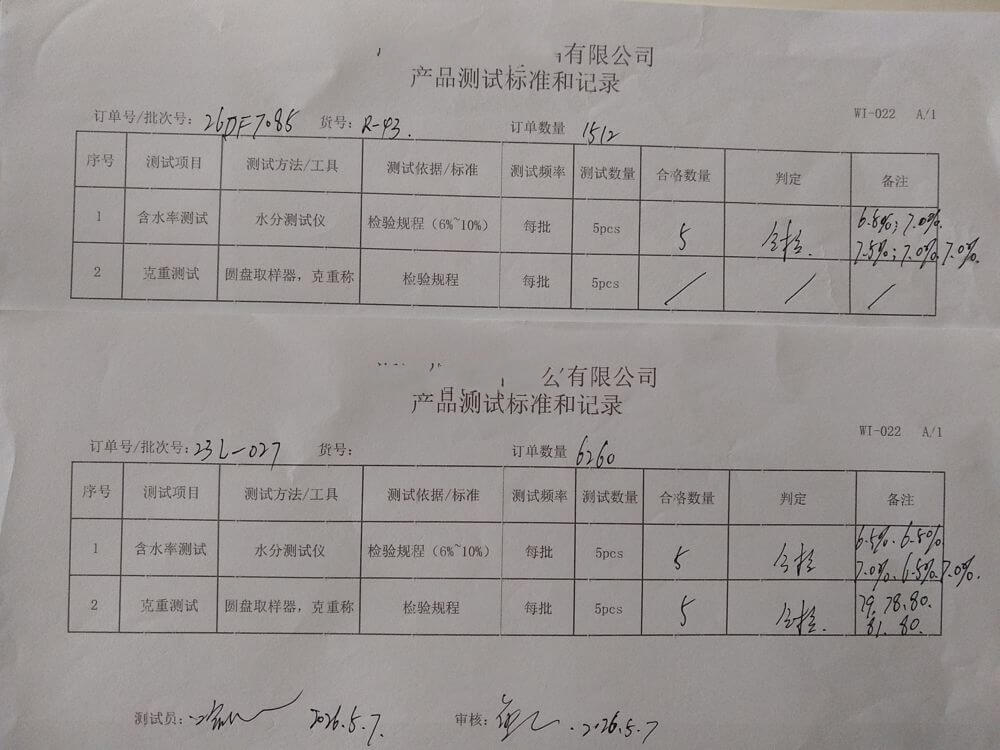
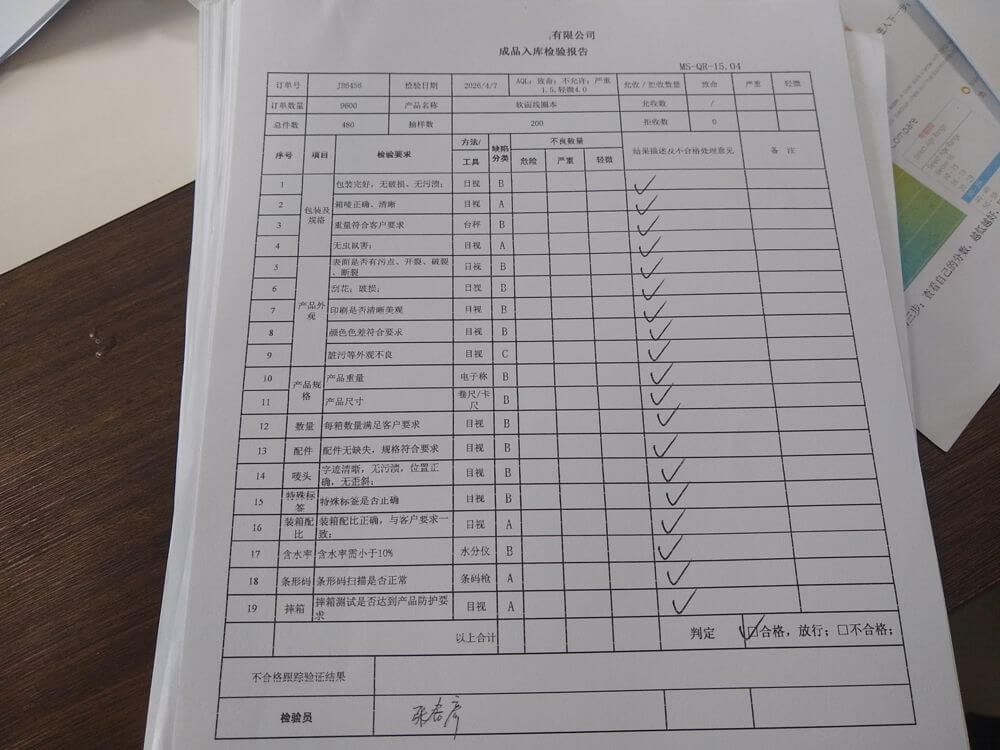

But when we asked the factory's "dedicated" inspector to demonstrate a live inspection on the production floor, they walked to a cramped corner, picked up a unit and fumbled with it aimlessly. It was immediately clear that the written standard was a prop prepared by a consultant, not a workflow embedded in daily operations.
True quality capability cannot be rehearsed.
The Missing Maintenance Technician
We have seen factories present complete, neatly filed equipment maintenance logs, with matching compliance stickers attached to every machine.
Yet the machines themselves were visibly dirty and poorly maintained. When our inspectors asked who performed the maintenance, where that technician was and what exact steps the maintenance involved, management could not answer. Their eventual explanation: "The technician is on leave." A machine that is actually maintained looks and sounds different from a machine with a fresh sticker.
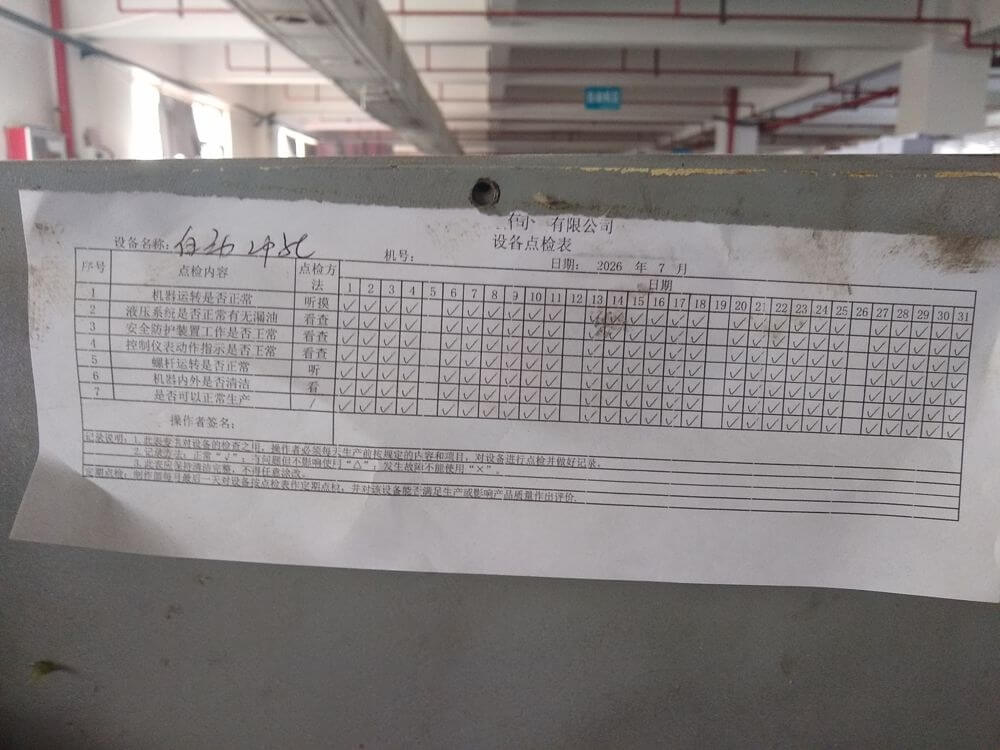
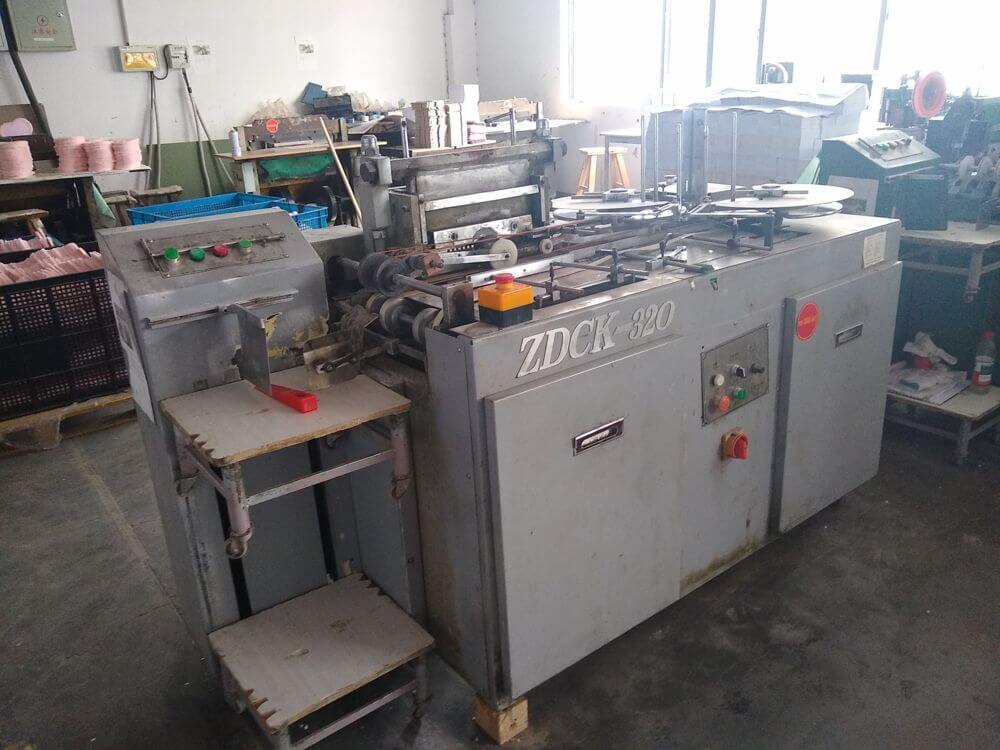

The lesson applies whether you are verifying labor conditions or manufacturing capability: do not accept a document as proof of reality. Ask a worker to perform the task described in the procedure. Ask the maintenance manager to open a machine panel. The gap between the paper and the floor is where your supply-chain risk lives.
Our Scope, the Frequency Advantage and the Hard Limits
Our Scope: What We Audit — and What We Do Not
Our team conducts quality-and-manufacturing-system-oriented factory audits (including our Swift Audit and Comprehensive Evaluation formats).
We do not perform formal accredited social-compliance-scheme audits — BSCI, SMETA, SA8000, Disney ILS, WRAP or C-TPAT accredited assessments sit outside our service scope and accreditation boundaries. Where your project requires a formal social-compliance audit, we can assist with referrals to qualified dedicated social-audit bodies.
What we can do is this: where you hold a third-party social-compliance report, we physically verify whether the production site named in that report matches the real-world facility manufacturing your orders, and we run quality-system and EHS on-site checks alongside. Quality assessment and formal social-scheme audits often need to run side by side for full supplier risk coverage.
The Frequency Advantage of Routine QC Visits
Social audits are point-in-time events, and a factory can prepare for them months in advance. Quality inspections happen frequently — per batch or per month. That frequency is a low-cost enforcement mechanism for buyers. When independent inspectors are physically on the floor for a pre-shipment inspection, they can perform simple visual spot checks that support your compliance goals:
- Are emergency exits unobstructed during a busy production day?
- Are the workers on the line the same ones on the factory's registered staff list?
- Are dormitory conditions visible from the production area acceptable?
These are not formal audit findings, and no brand compliance department will accept them as an official social-audit deliverable. But they give you a continuous, unfiltered view of day-to-day reality between audit cycles — which is exactly what prevents the "audit passed, then relax" pattern.
The Hard Limits of Any Social Compliance Audit
Even a well-executed semi-unannounced or fully surprise accredited audit cannot deliver an absolute guarantee of ongoing ethical conditions:
- The output is a time-bound snapshot; workplace practices can shift immediately after auditors leave, especially under fluctuating order volume and seasonal pressure.
- Tier-2 subcontractor workshops are excluded by default unless written into the audit scope beforehand.
- Certain sophisticated record manipulation and off-site worker coaching remain difficult to fully detect within short-duration on-site visits.
For high-risk supply chains, periodic repeat auditing combined with parallel quality-site oversight is more robust than relying entirely on one-time certificate acquisition.
Frequently Asked Questions
Announced audits are practical for initial supplier qualification, where you need full document access. Semi-unannounced balances practicality with reduced pre-audit preparation. Fully surprise audits deliver the highest realism but risk an incomplete or aborted assessment at higher cost. Most mature sourcing programs use semi-unannounced formats for recurring supplier monitoring.
The SAQ is a self-assessment form completed by the factory itself, with no third-party on-site verification. SMETA means independent auditors physically visit the plant, gather objective evidence and produce a formal report uploaded to the Sedex platform. An SAQ cannot substitute for a SMETA audit under most brand-compliance programs.
Only if subcontractor sites are explicitly added to the audit scope. Standard primary-factory audits exclude tier-2 workshops by default. If subcontracting forms a large share of your production volume, negotiate subcontractor-site inclusion before audit work begins.
No. All social-compliance audits produce a snapshot-in-time assessment with known structural blind spots — record divergence, interview-compromise risks and undisclosed subcontracting. A clean report lowers risk; it is never a zero-risk guarantee. Cross-check report metadata, non-conformity lists, audit mode and legal-entity matching before placing orders.
The top warning signs: the audited legal entity or physical address differs from your actual production factory; the report has expired or exceeds your buyer's validity window; major non-conformities are listed without complete CAPA closure evidence; the audit mode is fully announced for a high-risk supplier; and the report is silent on whether subcontractor sites fall inside the scope.
You can perform limited observational spot checks — fire-exit status, dormitory conditions, staffing consistency — during a quality-factory visit. That provides supplementary field observation but cannot replace a formal accredited social-compliance audit: it carries no formal scoring, no official CAPA, and most brand compliance departments will not accept it as an official deliverable.
A BSCI report represents conditions observed on its audit date only; it does not guarantee unchanged performance afterwards. If your brand risk exposure is high, evaluate the grade, audit mode, season of audit and subcontractor scope before deciding whether further assessment is needed. Also note that BSCI will not satisfy special brand-program requirements such as Disney FAMA.