
On-Site Story: When High Expectations Meet Harsh Reality
For this Pre-Shipment Inspection (PSI) commissioned by a Swedish importer, our inspector's journey started long before stepping onto the factory floor.
This case shows why many importers commission an independent third party agency to perform product inspection and catch surface defects before stainless steel bottles leave a China factory.
As our inspector later recounted, upon arriving at the local high-speed rail station, the factory driver was waiting — polite, welcoming, and overflowing with pride. As they drove toward the facility, the driver immediately struck up a conversation: "Have you ever visited our company before?"
When our inspector answered no, the driver smiled and pointed toward the massive digital billboard right by the exit elevators: "That largest screen right there? That's us. We specialize in high-end insulated bottles. Our quality, details, materials, and tech feel aren't just good — they are industry-leading."
It set a high bar. But when our inspector arrived at the facility and commenced the rigorous random sampling, the reality on the production line told a different story: surface polishing flaws were immediately uncovered across the batch.
Faced with the evidence, the factory staff quickly scrambled to explain, insisting it was an isolated mishap and "normally something like this shouldn't happen."
Defect Analysis
What looked like a simple finishing problem turned out to be a batch-wide consistency failure: dull patches, swirl marks, and orange-peel texture all surfaced during random sampling. Had this shipment left the factory, the return rate would have been ugly. Below is the inspection breakdown.
| Finding Analysis | Details |
|---|---|
| Product | Stainless steel bottle |
| Defect | Poor polishing on surface |
| Root Cause | Poor workmanship and delinquent online check during production |
| Corrective Action | Pick out defective units, re-make, and assign independent inline inspector to check before next move |
| Frequency | ⭐⭐⭐⭐☆ |
| Rework Difficulty | ⭐⭐⭐☆☆ |
| Rework Collateral Risk | ⭐⭐⭐☆☆ |
What Is Poor Polishing and Why Does It Matter?
Poor polishing refers to an uneven, dull, or scratched surface finish on stainless steel products. Instead of a smooth, mirror-like appearance, the bottle surface may show:
- Dull or hazy patches — areas that lack luster and reflectivity
- Visible scratches or swirl marks — left behind by improper grinding or buffing
- Orange peel effect — a textured, bumpy surface resembling the skin of an orange
- Pitting or tiny holes — small cavities on the surface caused by material defects or over-polishing
For consumer products like stainless steel water bottles, the surface finish is often the first thing a customer notices. A bottle with poor polishing looks cheap, unprofessional, and raises doubts about the overall quality of the product. In competitive markets where branding and aesthetics matter, this defect can directly impact sales and brand reputation.
Root Cause Analysis: Why Does Poor Polishing Happen?
Based on our on-site experience inspecting stainless steel products in China, poor polishing typically stems from one or more of the following factors:
1. Poor Workmanship and Inadequate Skill
Polishing stainless steel to a high-quality finish requires skill and experience. Workers who are not properly trained may:
- Use incorrect polishing wheels or compounds for the specific grade of stainless steel
- Apply uneven pressure during buffing, resulting in inconsistent surface finish
- Rush through the process without allowing sufficient time for each polishing stage
2. Delinquent Online Inspection
This is the critical failure point identified in our product inspection. When online checks are not performed consistently or rigorously:
- Defective units continue down the production line undetected
- The root cause (e.g., a worn-out polishing wheel or incorrect parameter) is not identified and corrected early
- By the time the defect is caught, a large batch of products may already be affected
3. Raw Material Surface Defects
The base material itself may have inherent issues that affect polishing results:
- Scratches or pits from the manufacturing process
- Pickling marks from acid treatment
- Inclusions (non-metallic particles) that become exposed during polishing and create visible defects
4. Material Hardness Issues
If the stainless steel has insufficient hardness, it is difficult to achieve a bright, mirror-like polish. Softer materials are also more prone to:
- Orange peel during deep drawing or forming processes
- Scratches that are harder to buff out
5. Incorrect Polishing Parameters
Even with good material and skilled workers, improper process parameters can ruin the finish:
- Wrong polishing speed or pressure
- Inconsistent grit progression (skipping from coarse to fine too quickly)
- Overheating the surface, which can cause discoloration or warping
Fixing Stainless Steel Polishing Defects: Practical Solutions
Immediate Corrective Action (For Current Batch)
- Pick out and rework — Identify all units with poor polishing and send them back for re-polishing.
- Assign an independent inline inspector — Designate a dedicated quality control person to check each piece immediately after polishing, before it moves to the next production stage.
Long-Term Preventive Measures
| Measure | Description | Effectiveness |
|---|---|---|
| Worker Training | Provide formal training on proper polishing techniques, including wheel selection, compound usage, and pressure control. | ⭐⭐⭐⭐⭐ |
| Standardized Process | Document and enforce standard operating procedures (SOPs) for each polishing stage, including grit progression and dwell time. | ⭐⭐⭐⭐⭐ |
| Regular Tool Maintenance | Inspect and replace polishing wheels regularly. Worn-out wheels can cause inconsistent finishes. | ⭐⭐⭐⭐ |
| Raw Material Quality Control | Source stainless steel from reputable suppliers and inspect incoming material for surface defects before production begins. | ⭐⭐⭐⭐⭐ |
| In-Process Inspection Checkpoints | Establish multiple inspection points throughout the polishing process, not just at the end. | ⭐⭐⭐⭐⭐ |
| Parameter Monitoring | Track polishing speed, pressure, and temperature to ensure they remain within optimal ranges. | ⭐⭐⭐⭐ |
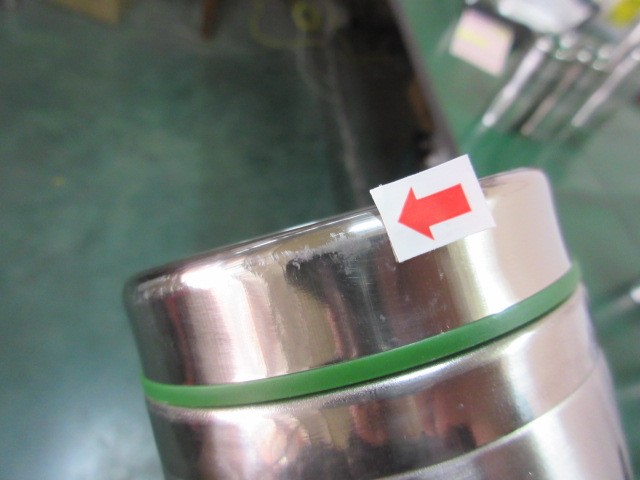
On-Site Evidence Gallery
The unedited technical snapshots below document the poor polishing observed during the inspection:
Rework Effort & Risk Assessment
| Evaluation Metric | Rating | What It Means |
|---|---|---|
| Frequency | ⭐⭐⭐⭐☆ | High. Poor polishing is a recurring issue in many production batches, especially when inspection is lax. |
| Rework Difficulty | ⭐⭐⭐☆☆ | Moderate. Rework requires removing the defective surface layer and re-polishing the entire bottle. This is time-consuming (5-10 mins/piece) and requires skilled labor. |
| Rework Collateral Risk | ⭐⭐⭐☆☆ | Moderate. Aggressive re-polishing can thin the material, alter the bottle's dimensions, or introduce new scratches. In severe cases, the product may be scrapped entirely. |
QC Insight for Buyers
For procurement professionals and brand owners sourcing stainless steel bottles:
- Polishing is an art, not just a process. The quality of the final finish depends heavily on the skill of the workers. Visit your supplier's factory and observe their polishing line. If you see rushed work or poorly maintained equipment, that's a red flag — regardless of what the lobby billboards claim.
- Demand in-process inspection. Do not rely solely on final random inspection. Require your supplier to have dedicated inline inspectors checking each piece immediately after polishing. This single step can reduce defect rates dramatically.
- Set clear surface finish standards. Define what "acceptable" looks like. Use visual standards (e.g., polished samples showing minimum acceptable quality) and include them in your purchase agreement. Do not leave quality to subjective judgment.
- Test before mass production. Always request a pre-production sample run and inspect the surface finish thoroughly before giving the green light for full-scale production.
- Consider material selection. If your design requires a mirror finish, ensure the supplier uses stainless steel with appropriate hardness and surface quality. Cheaper materials may save cost upfront but will cost you more in rework and rejects later.
- Don't let marketing replace verification. A big screen, a proud driver, and industry-leading claims mean nothing if the product doesn't deliver. Independent inspection is the only guarantee.
What This Polishing Defect Means for Your Stainless Steel Orders
This case study is part of our ongoing effort to share real, on-the-ground findings with buyers, brand owners, and sourcing professionals.
As part of our focus on China inspection service, we help importers stop quality issues before they turn into returns or brand damage.
Key takeaway: A factory can have the biggest screen, the best branding, and the proudest claims — but quality is not in the marketing. It's in the product. And the only way to verify it is to check it yourself.
We hope these real case studies help you ask better questions, set clearer standards, and catch more issues before they ship.
Have a similar quality issue? Feel free to reach out — we're happy to share our experience.
Let CNQ Help You Prevent These Issues
As a China quality inspection company with over 17 years of expertise, CNQ’s QC inspectors specialize in metal finishing and polishing quality control. We look past the marketing hype to verify the actual output on the workshop floor. Before your shipment leaves the factory, our inspectors will:
- Conduct in-process inspections during the polishing stage to catch defects early
- Perform detailed surface quality checks under proper lighting conditions
- Provide clear pass/fail judgments based on your predefined quality standards
- Document defects with high-resolution photos for your reference
Don't let poor polishing ruin your brand's reputation. A simple, one-day inspection can save you from costly returns, rework, and customer complaints.
Want to quickly estimate your inspection cost? Use our Inspection Cost Calculator to see how many man-days a single PSI requires.
Concerned about your product quality? Get in touch — we've been helping buyers protect their brands for over 17 years.
Frequently Asked Questions About Stainless Steel Bottle Polishing
Poor polishing is an uneven, dull, or scratched surface finish. Instead of a smooth mirror-like appearance, the surface may show dull or hazy patches, visible scratches or swirl marks, orange peel effect, or pitting from over-polishing.
It typically stems from poor workmanship and inadequate skill, delinquent online inspection, raw material surface defects, insufficient material hardness, or incorrect polishing parameters like wrong speed, pressure, or grit progression.
Pick out and rework defective units, assign an independent inline inspector to check every piece immediately after polishing, and specify surface finish requirements with reference samples before mass production.