
On-Site Story: From Full Confidence to an Unexpected Pitfall
This pre-shipment inspection (PSI) was commissioned by a prominent UK toy importer on August 11, 2025. As our inspector Kevin later recalled, although the trading company was based in Ningbo, the actual manufacturing facility was located in Yiwu. To underscore the supplier's commitment, Tina, the account merchandiser, travelled by high-speed rail from Ningbo specifically to monitor the product inspection process on-site — a clear sign of just how much this client mattered to them.
Tina picked up Kevin directly from the train station. During the drive to the factory, she opened up with enthusiasm, explaining that this UK buyer had been their long-term partner. In the past, the order volume was modest, but over the last two years, riding the craze for sticky TPR squishy toys, the client's business had exploded. They had been giving the trading company larger and larger orders, and management now treated this client as a top priority. Quality control had become strict — for almost every shipment, their own QC or merchandisers would visit the factory in person to monitor production and quality.
Tina added with excitement that the client had explicitly told them this order was designated for their newly designed promotional display stands, so quality was paramount. If this display batch succeeded, the follow-up reorders would be substantial. That was why they had not only selected a major, specialized TPR manufacturer in Yiwu, but had also sent their QC to visit during mid-production, and again right before packaging. Only after both visits passed did they allow the factory to proceed with packing. So this shipment would definitely be flawless — Tina said this with absolute confidence.
Kevin recalled that even sitting in the back seat, he could feel her overflowing confidence and happiness. It felt as though a smooth PASS today, shipment tomorrow, and a massive reorder the day after were already guaranteed. Kevin smiled and responded that it was always rewarding to work with buyers like this — growing alongside them, helping them expand their market, and earning stable follow-up orders in return. Dedication paying off was the best outcome. Tina nodded repeatedly in agreement. As the conversation flowed, she grew more animated and candidly shared that last year she had nearly been fired due to missed sales targets. Fortunately, this account took off and saved her career with a stream of orders. She felt deeply grateful to this buyer and personally poured her heart into every single order.
Chatting away, they arrived at the facility. Kevin proceeded with the standard protocol: entering the warehouse, counting cartons, verifying quantities, selecting sample cartons, and moving them to the factory inspection room. During all of this, Kevin said, hope was thick in the air — until the first sample boxes were opened, and the room suddenly went silent.
Kevin said Tina stood frozen in shock. She uttered the exact phrase our inspectors hear all too often: "We calculated every detail… who could have imagined we'd stumble on this?! We focused 100% on the product quality and completely overlooked the packaging box. And the packing workers just packed them through without saying a word…"
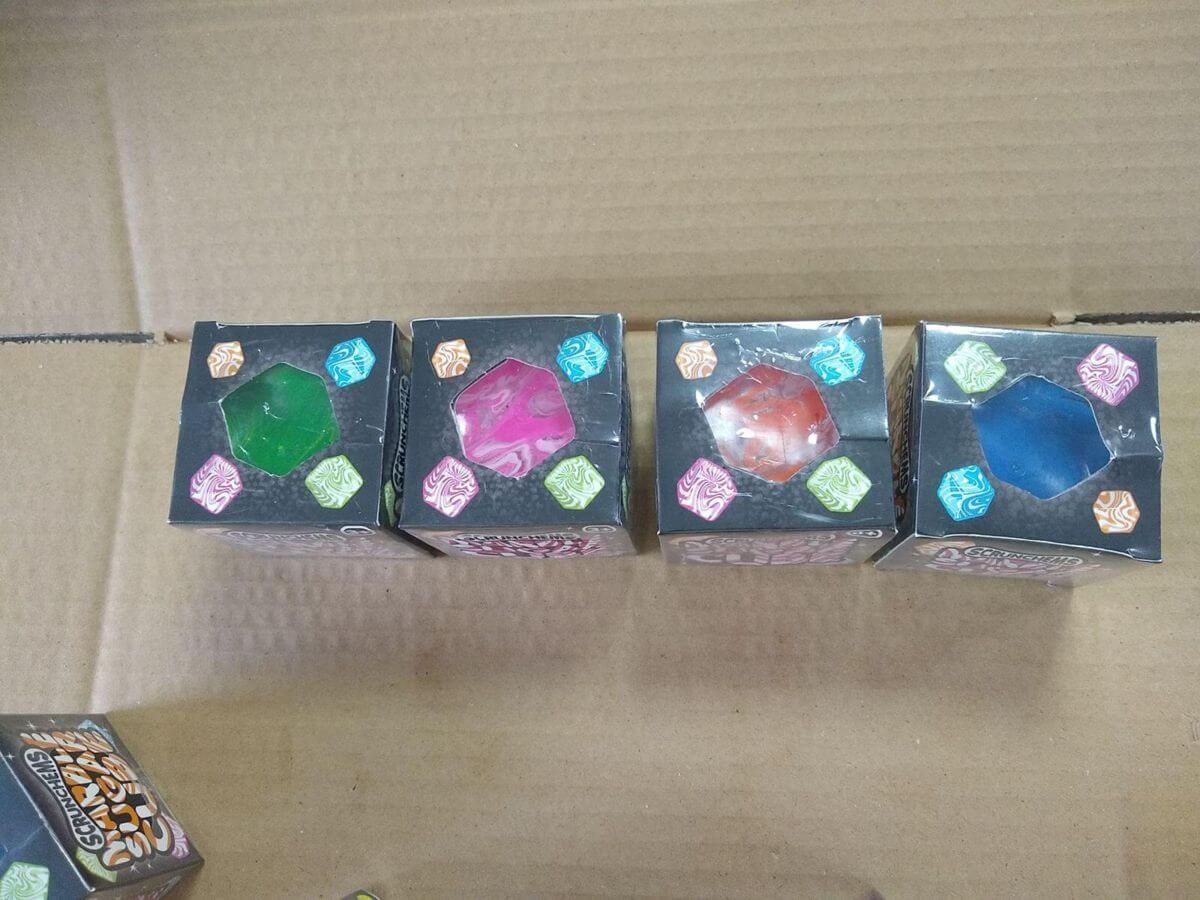
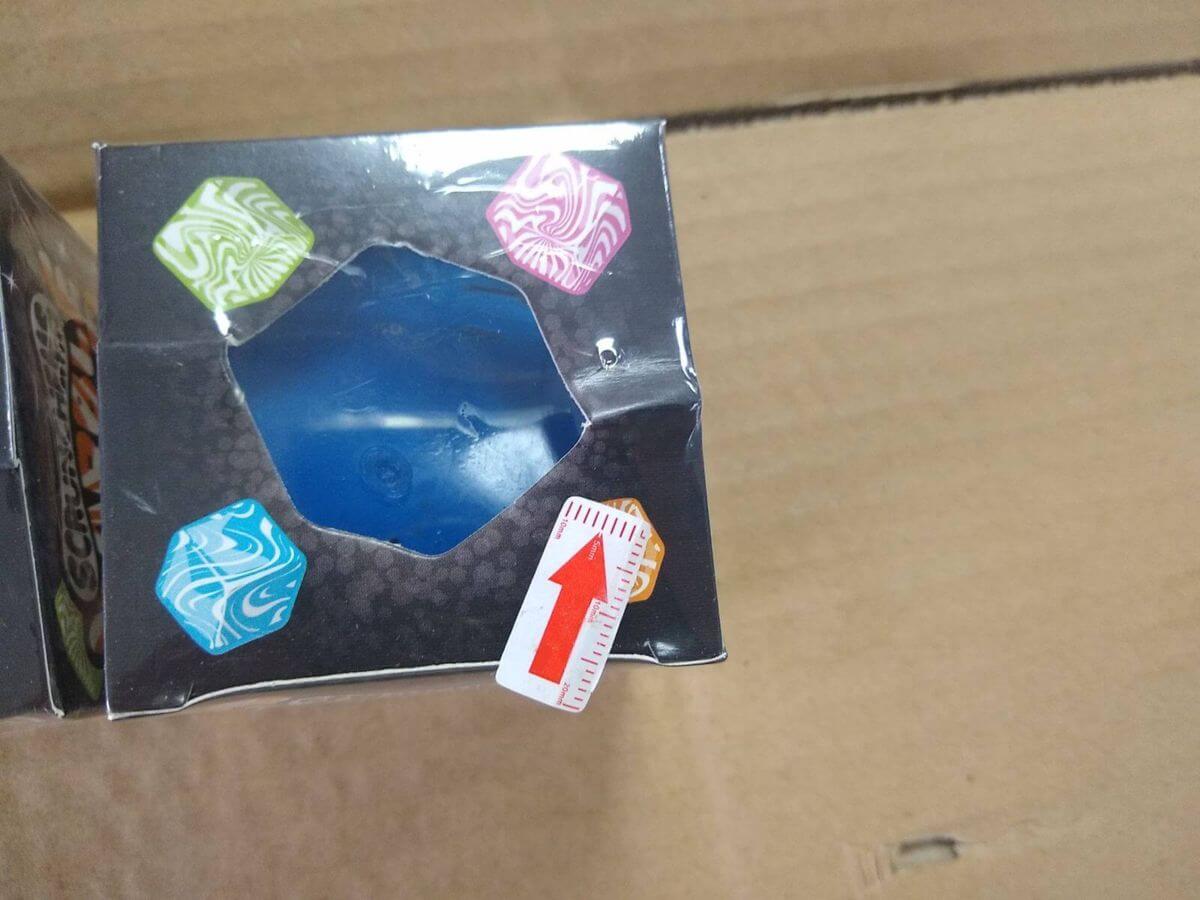
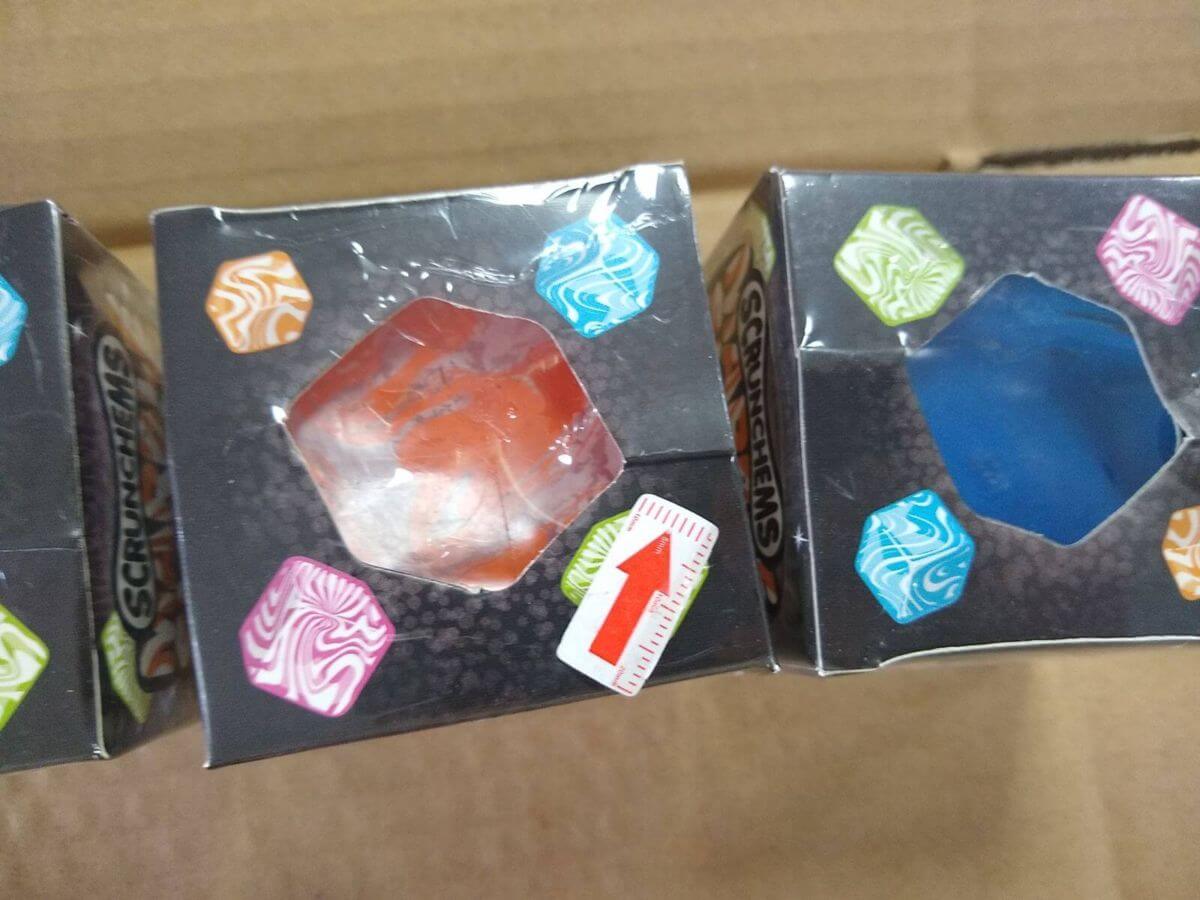
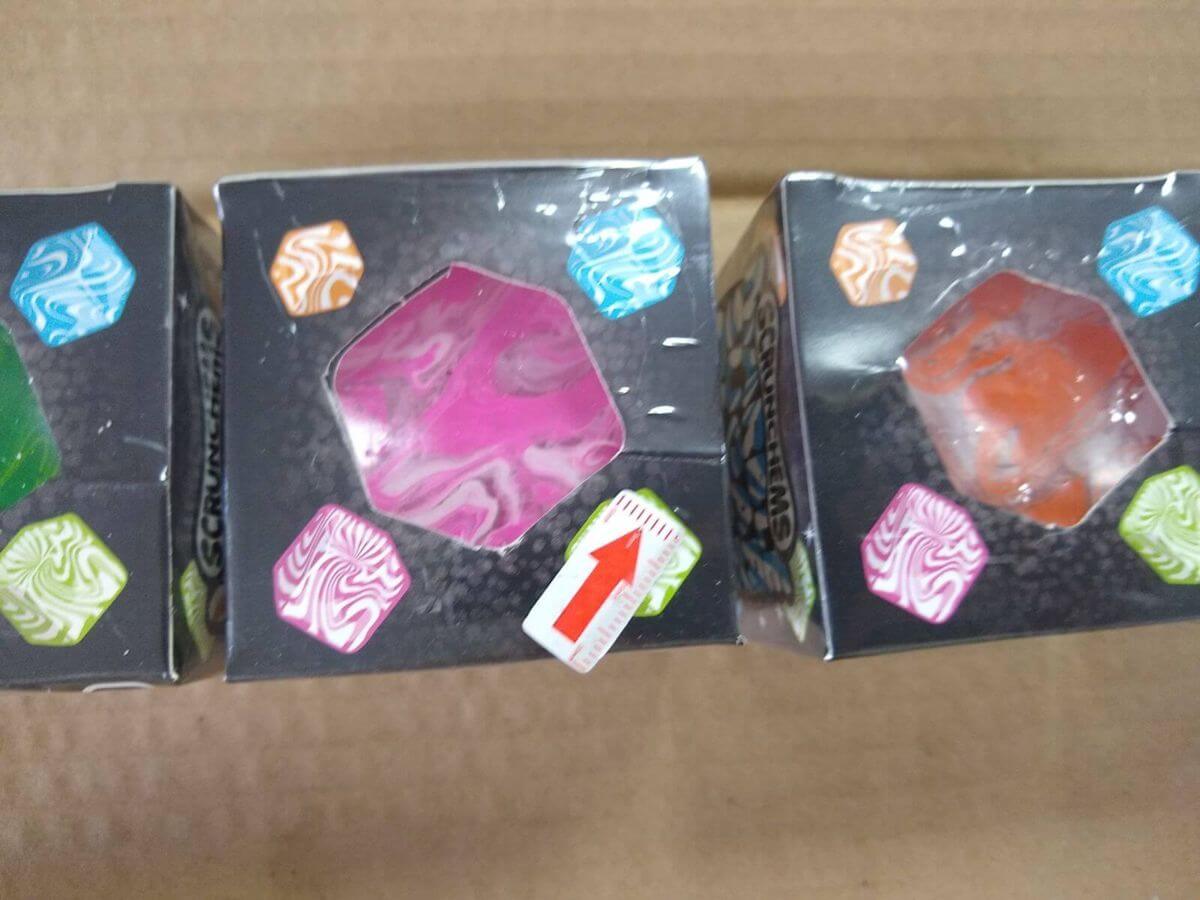
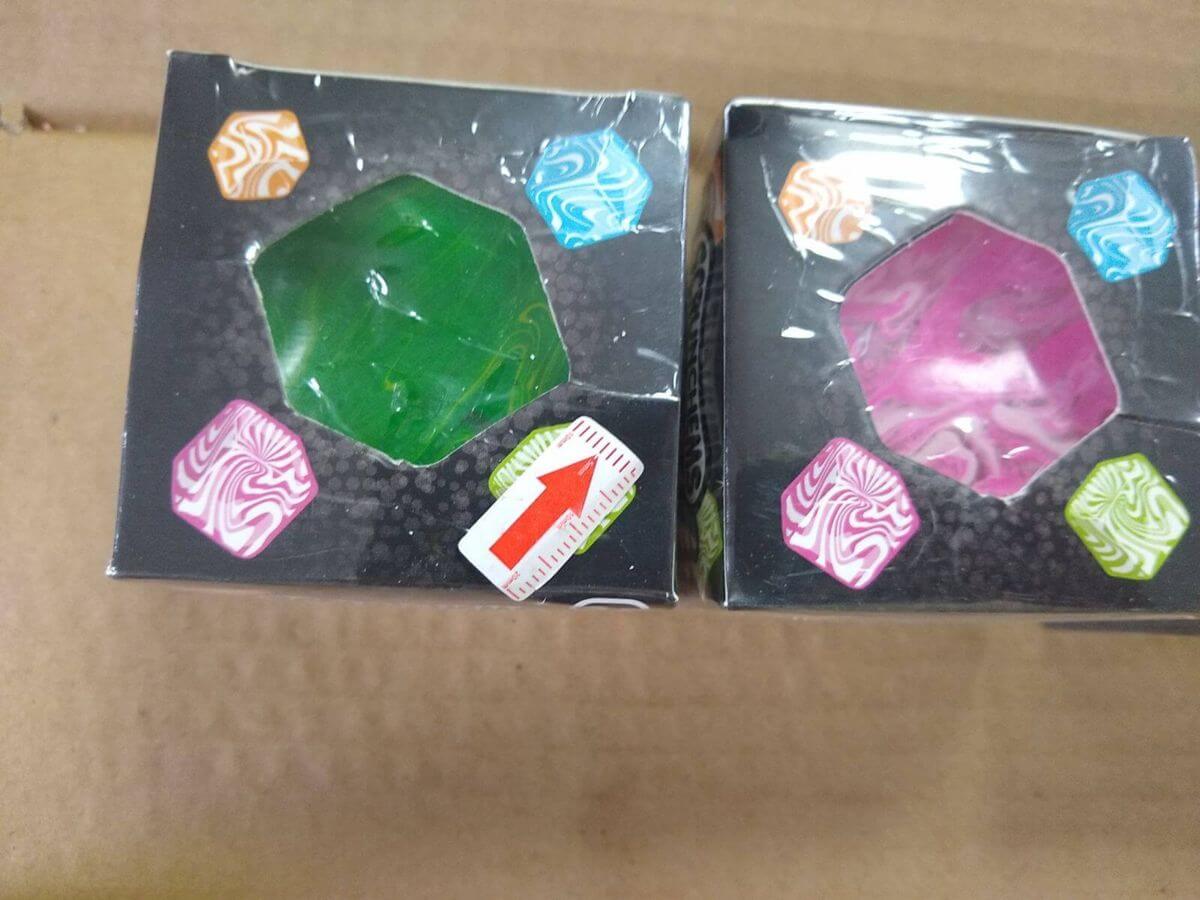
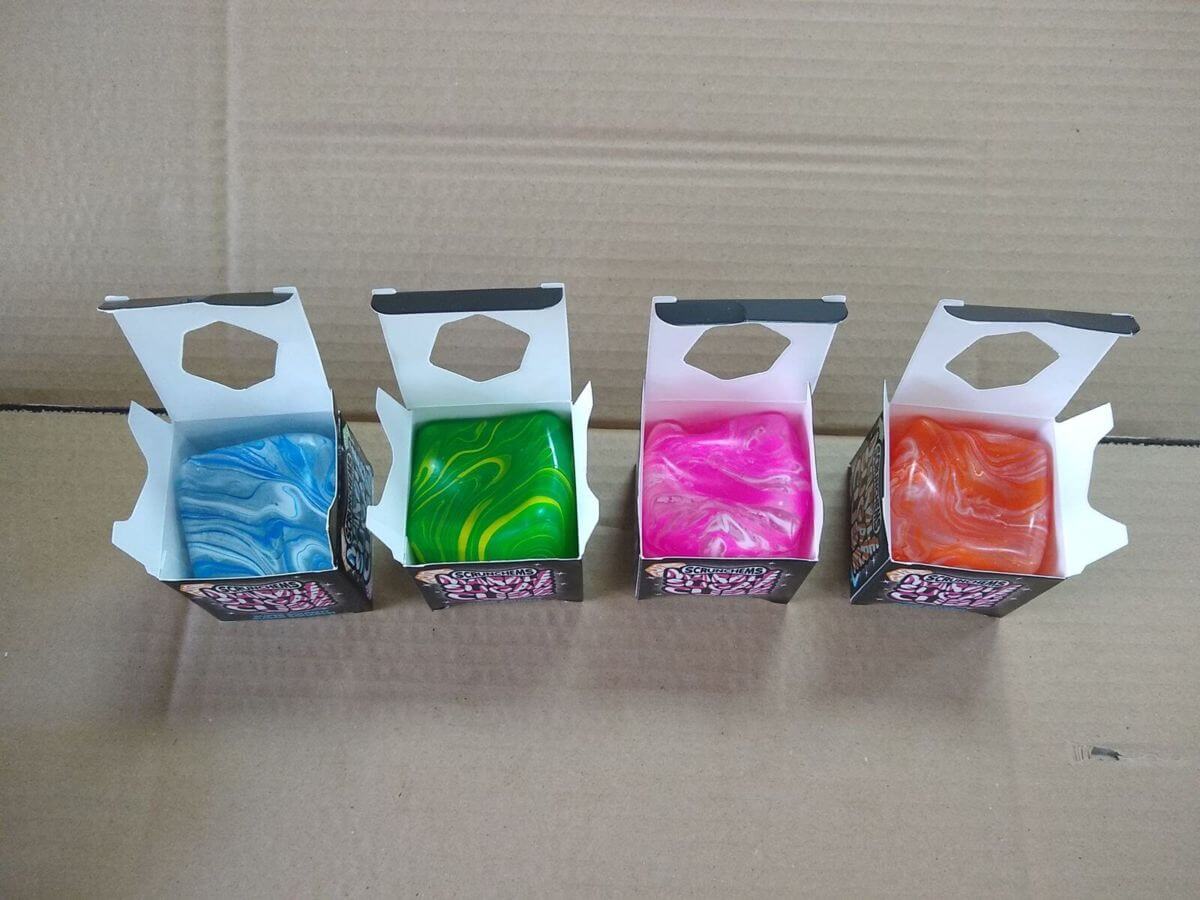
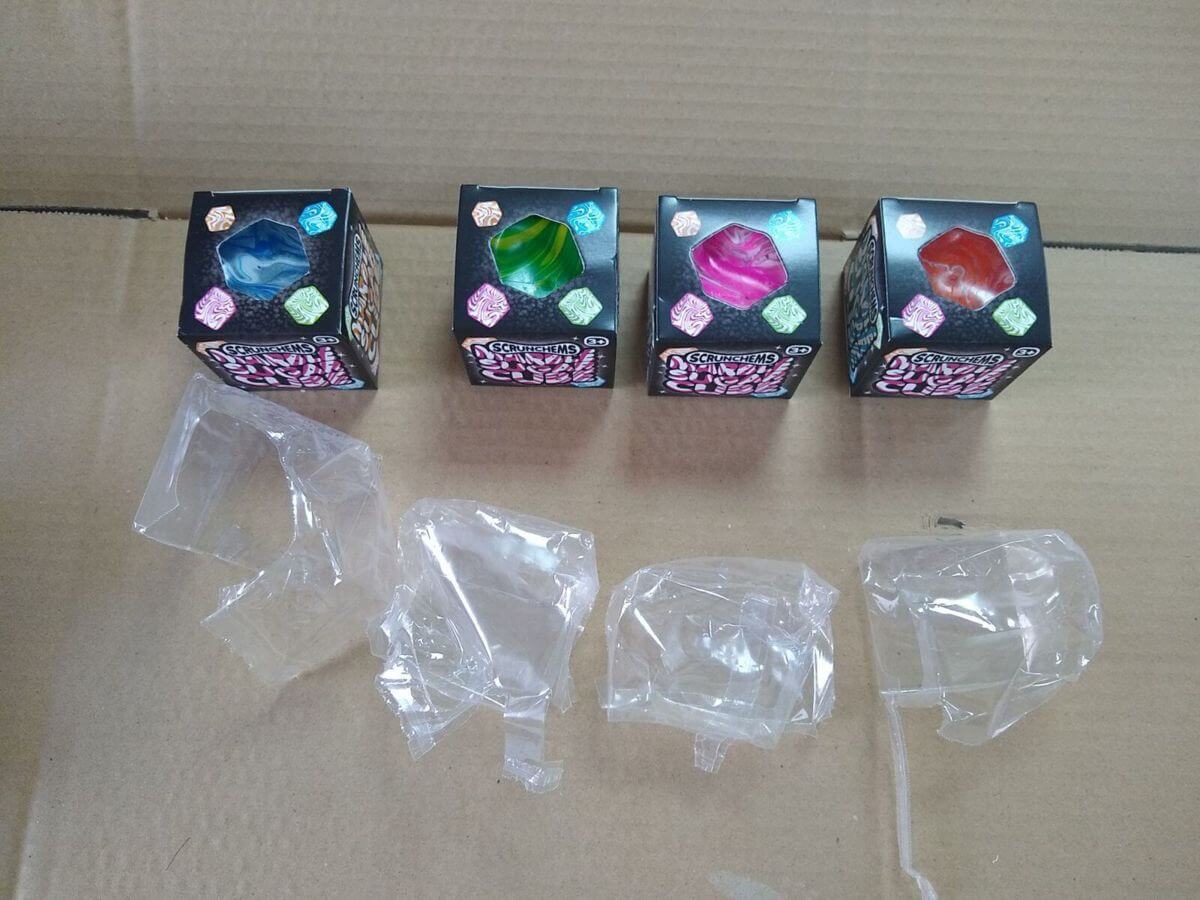
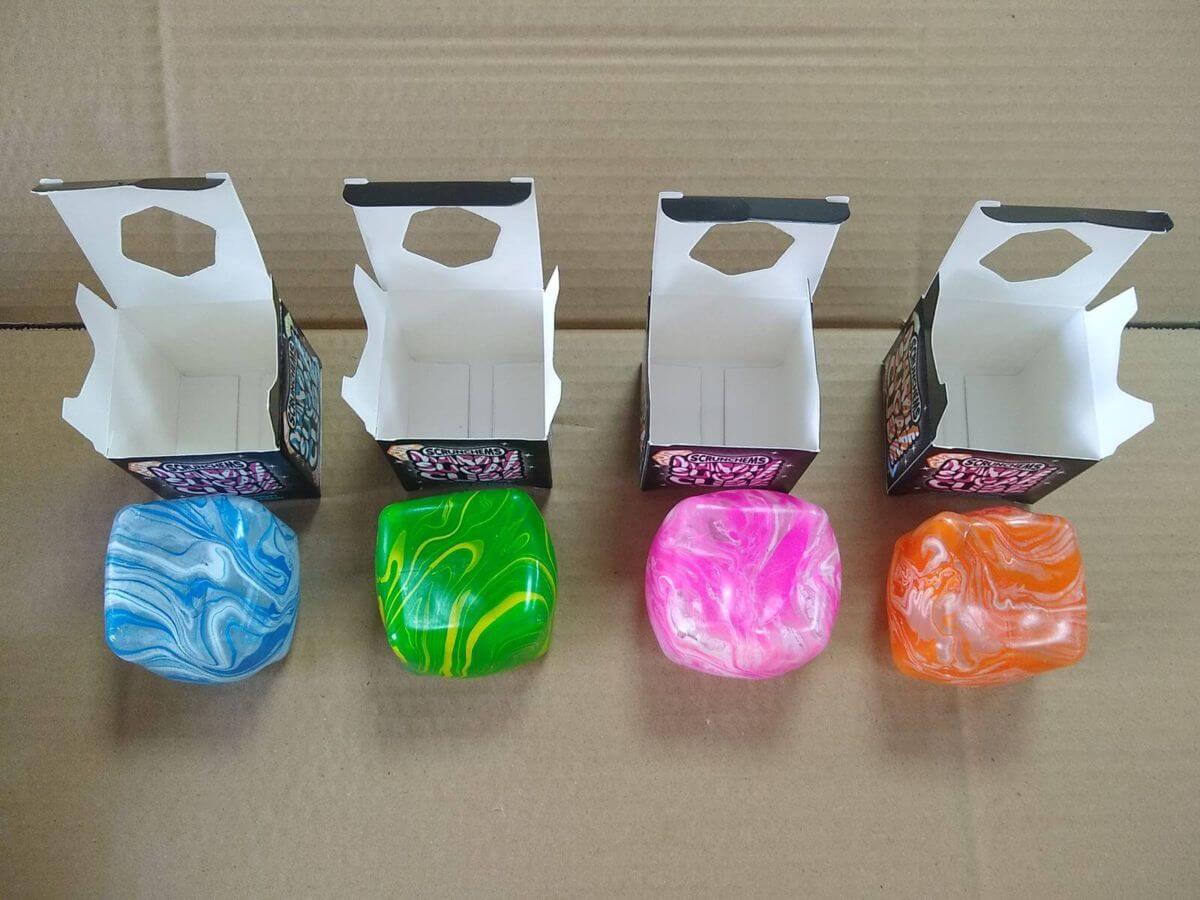
The product itself — a TPR sugar-filled squishy cube — was physically flawless, with excellent tactile feel and zero defects. The disaster lay entirely in the retail color box. The box featured an open window design, but was manufactured using low-GSM, flimsy paperboard. Because of the cut-out window, the remaining paper frame around the edges became extremely narrow and weak. When shrink film was applied and heated, the excessive tension squeezed and crushed the thin paper frame, causing unsightly wrinkles and buckling. While it didn't affect the toy's functionality, the retail presentation looked cheap, ruined, and completely unfit for the buyer's promotional displays.
Tina immediately consulted factory management on-site. The factory argued the box deformation was only temporary surface compression caused by shrink-film wrapping, and claimed the window-frame would spring back once the shrink film was removed at destination. The inspector peeled shrink film off several affected samples for verification, and confirmed paper-fiber buckling was permanent even without film in place. Given consistent failure across multiple sample units, the inspection result was marked On-Hold. Shipment could not proceed with existing color-box stock.
Product Inspection Finding: A Real Factory Case Study
This defect was identified during the final random inspection for retail color box packaging. It is a typical and recurring paper quality issue, documented here as a practical reference to help you brief your supplier before mass production begins.
Among our quality control inspection experiences, we often encountered this packaging defect. So sharing the root-cause analysis to provide actionable insight and the required corrective steps to secure your product packaging standard.
| Finding Analysis | Details |
|---|---|
| Product | TPR sugar-filled squishy cube (windowed color box) |
| Defect | Packaging wrinkle mark / window frame buckling |
| Root Cause | 1) Color box made from low-GSM paperboard; 2) Window design weakened structural integrity; 3) Excessive tension from shrinking film. |
| Corrective Action | 1) Upgrade to higher-GSM, structural-grade paperboard; 2) Eliminate shrink film packaging or reduce machine tension/heat settings. |
| Frequency | ⭐⭐⭐⭐⭐ (Very High) |
| Rework Difficulty | ⭐⭐⭐⭐⭐ (Extremely Hard) |
| Rework Collateral Risk | ⭐⭐⭐⭐☆ (High Loss Risk) |
Technical Deep Dive: Why Does the Color Box Wrinkle?
Color box wrinkling is not a random event — it is the inevitable result of three factors working together: paper GSM, die-cutting process, and shrinking film pressure. Understanding the physics is what allows you to prevent it in the next order.
- Low-GSM paper lacks structural rigidity: A window-cut color box has a portion of its surface removed by die-cutting — the remaining narrow edges must carry the structural support of the entire box. When GSM is insufficient (below roughly 300gsm), these narrow edges behave like thin paper strips, bending and deforming at the slightest pressure.
- Shrinking film pressure is the breaking point: Heated shrinking film generates inward contraction force. For high-GSM boxes, this force is negligible — but for low-GSM narrow edges, it is enough to crush them into wrinkles. Worse still, once the paper fibers are compressed and deformed, the wrinkle becomes permanent.
- Die-cutting amplifies the problem: The die-cut edges around the window are already narrow, and with low-GSM paper, the structural strength at those edges is essentially zero. When shrinking film pressure is applied, this becomes the first place on the entire package to collapse.
Paper GSM Reference Table: Recommended GSM by Color Box Type
One of the most common questions buyers ask is: "What paper weight should I specify for my retail box?" The answer depends on the box structure, the product weight, and whether the box is die-cut. The table below provides practical reference values based on our on-site inspection experience.
| Color Box Type | Recommended GSM | Typical Use Case |
|---|---|---|
| Standard retail box (no die-cut window) | 250-300 gsm | Lightweight consumer goods, small toys |
| Window-cut retail box | 300-350 gsm | TPR toys, promotional gifts (this case) |
| Heavy-duty retail box | 350-400 gsm | Electronics, premium gift sets |
| Luxury packaging box | 400+ gsm | Branded packaging, collectibles |
Key principle: When a box has a die-cut window, the remaining paper frame must carry the structural load of the entire box. That is why window-cut boxes require a higher minimum GSM than solid-wall boxes of the same size. Specifying below 300 gsm for a window-cut box is one of the most common causes of frame buckling under shrink film pressure — exactly what happened in this case.
Shrink Film Process Parameters: Recommended Settings for Window-Cut Color Boxes
Shrink film is not a "set and forget" process. For window-cut boxes with narrow paper frames, the machine parameters must be calibrated specifically for the box structure. The table below provides reference values based on our quality inspection experience.
| Parameter | Recommended Range | Notes |
|---|---|---|
| Shrink temperature | 140-160°C | Above 160°C significantly accelerates paper deformation on thin frames |
| Shrink time | 3-6 seconds | Longer exposure increases contraction force on paper edges |
| Film thickness | 15-19 micron | Thicker film = stronger contraction force = higher risk for window boxes |
| Tension setting | Medium-low | Window-cut boxes should never run at maximum tension |
| Conveyor speed | Standard | Slower speed allows more heat transfer — not always better |
Key principle: The goal of shrink film is to hold the box securely — not to compress it. If the film is pulling the paper inward, the tension is too high. A quick way to verify: after wrapping, the paper frame should remain flat and rigid, with no visible ripples or inward curvature.
Note: These values are indicative reference ranges drawn from our field experience, not universal machine settings. Actual parameters vary by equipment, film type, box size and factory practice — always validate them on your own box structure before locking mass-packing settings.
Root Cause Analysis
- Insufficient paper GSM: To control costs, the factory used paper below the required GSM, ignoring the structural demands of the window-cut design.
- Shrinking film pressure not verified: The factory ran the shrinking film process with standard parameters, without any pressure testing or parameter adjustment for the specific structure of a window-cut box.
- No packaging-specific QC in the supply chain: The trading company's QC visited the factory twice (mid-production and pre-packaging), but both visits focused on the product itself, not on the color box or the packaging process. This reveals a common blind spot — product QC is not the same as packaging QC.
Common Color Box Packaging Defects — Quick Reference
While this case focuses on wrinkle marks caused by shrink film pressure, color box packaging has several other common defect categories. Understanding the full spectrum helps buyers build a more complete packaging QC checklist.
| Defect Type | Typical Cause | Related to This Case? |
|---|---|---|
| Wrinkle / frame deformation | Low-GSM paper + shrink film pressure | This case |
| Die-cut burrs / rough edges | Worn cutting die or incorrect pressure | Same die-cutting process family |
| Print color shift | Ink batch variation or registration error | Different process, same box |
| Lamination bubbling | Incorrect temperature or uneven adhesive | Different process, same box |
| Window misalignment | Insufficient die-cutting precision | Related structural issue |
| Glue overflow / poor bonding | Excess adhesive or insufficient curing time | Different process, same box |
Why this matters: When buyers brief their supplier on "packaging quality," they often only mention one or two defect types. This table helps you expand the conversation to cover the full range of common retail packaging issues — making your pre-production briefing more complete.
Inspection Photos
Rework Effort & Risk Assessment
How bad is this defect if it slips through to your warehouse?
| Evaluation Metric | Rating | What It Means |
|---|---|---|
| Frequency | ⭐⭐⭐⭐⭐ | Very High. Whenever low-GSM paper is used with a shrinking film process, nearly every batch will show this defect — and it's usually consistent across the whole lot, not an isolated issue. |
| Rework Difficulty | ⭐⭐⭐⭐⭐ | Extremely Difficult. Once paper fibers are compressed, the wrinkles cannot be smoothed out — the only fix is scrapping the entire batch of color boxes and reprinting and repackaging them. |
| Rework Collateral Risk | ⭐⭐⭐⭐☆ | Relatively High. Reprinting and repackaging means shipment delays, and it may also require unpacking already-sealed products, adding extra handling and rework costs. |
These are avoidable setbacks. While full-box reprinting and repacking can create substantial extra expenditure and timeline pressure, nearly all of this risk can be mitigated early by locking in packaging specifications, completing pre-production packaging validation, and including packaging checks within your inspection scope — before mass-packaging gets underway.
Rework Cost Comparison: What Happens If the Defect Slips Through?
Buyers often underestimate the cost difference between catching a packaging defect early versus discovering it downstream. The table below provides a rough comparison based on real-world scenarios.
| Scenario | Estimated Cost Impact | Time Impact |
|---|---|---|
| Caught during pre-production (sample stage) | Near zero — adjust parameters, reprint samples only | None |
| Caught during mass production (before shipment) | Full reprint of color boxes × 1.5-2.0 multiplier + repacking labor | 1-2 week delay |
| Caught after arrival at destination | Return shipping + reprint + repacking + retail launch delay + brand damage | 3-6 week delay |
Key takeaway: The cost of catching this defect at the pre-production stage is essentially zero. The cost of catching it after the shipment arrives is many times the original packaging budget — and the brand damage is not quantifiable in dollars. This is why a simple pre-production golden sample sign-off is the single highest-return QC investment in the packaging workflow.
Note: These cost multipliers and timelines are indicative estimates based on typical scenarios we have seen. Actual impact varies with order quantity, box complexity, freight terms and season — treat them as planning guidance, not a quotation.
Pre-Production Packaging Validation Checklist
This checklist covers the critical packaging checkpoints that should be verified before the factory begins full-scale packing. It is designed to be shared directly with your supplier or trading partner.
| # | Checkpoint | Verification Method | Pass Criteria |
|---|---|---|---|
| 1 | Paper GSM meets PO specification | Mill certificate or physical measurement | ≥ 300 gsm for window-cut boxes |
| 2 | Window frame edge width is sufficient | Physical measurement of the narrowest frame section | ≥ 15 mm on all sides |
| 3 | Golden sample fully packed and signed | 5-10 units, shrink-wrapped, approved under standard lighting | No wrinkles, no frame deformation, no film creases |
| 4 | Shrink film parameters calibrated for this box | Factory machine log or live verification | Temperature ≤ 160°C, tension at medium-low |
| 5 | Paperboard supplier locked for the full run | Written confirmation from factory | No substitution without buyer approval |
| 6 | Spot-check plan for mass production | Agreed sampling frequency and responsible person | Every 200-500 units inspected during packing |
How to use this checklist: Share it with your supplier before the order is placed. Ask them to confirm each item in writing. During the pre-shipment inspection, the inspector should verify items 1, 2, 3, and 4 on-site using the actual production output.
Note: The threshold values in this checklist (frame width, shrink temperature, paper GSM) are indicative starting points rather than fixed specifications. They will differ somewhat between factories and box designs — confirm them against your own structure and supplier capability before mass production.
💡 TPR Squishy Color Box Packaging QC Insight for Buyers
In retail packaging, paper quality (GSM) and shrink-wrapping tension are two critical factors that directly impact the final presentation of your color box. Low-GSM paperboard lacks the structural integrity to withstand shrink film pressure — especially when an open window design further reduces the box's load-bearing frame.
When briefing your supplier, consider these essential QC steps:
- Mandate explicit paper GSM specifications: Never just instruct your supplier to "pack it well." Clearly specify minimum paperboard weight (e.g., 300+ GSM for window-cut boxes) and reinforced framing for windowed boxes in your pre-production checklist.
- Control shrink film tension: Require your factory to calibrate packaging machinery tension and heat settings prior to mass packing to achieve a sleek wrap without crushing fragile box corners.
- Enforce pre-packaging sample sign-off: Mandate that the factory produce 5–10 fully packaged, shrink-wrapped golden samples for physical approval before full-run packaging commences.
A simple paper quality test and machine calibration during pre-production can save thousands of dollars in repacking labor and box replacement costs — making this one of the most common and preventable issues we catch during our product inspection services in China.
Let CNQ Protect Your Packaging Quality
At CNQ, our on-site inspectors don't just look at the product itself — we examine packaging materials, packaging processes, and the final presentation together. As an objective China inspection company with over 17 years of on-the-ground experience, we know that packaging QC is a discipline of its own. Before your shipment departs, our team will:
- Check the color box for paper GSM, die-cutting quality, and print finish.
- Evaluate the paper surface for wrinkles or deformation after shrinking film packaging.
- Cross-check against your packaging specifications, including window-cut design, edge margins, and structural integrity.
- Provide clear, photo-documented reports so you can make decisions based on facts rather than supplier assurances.
Whether it's the product or the packaging — let CNQ verify before your shipment leaves. Partner with CNQ to secure your product quality across China and Southeast Asia.
Frequently Asked Questions About Color Box Packaging Inspection
The two most common causes are low-GSM (gram per square meter) paper that lacks structural rigidity, and excessive pressure from shrinking film during the packaging process. When thin paper is tightly wrapped in shrinking film, the film's contraction pulls the paper surface inward, creating visible wrinkles along the edges — especially around die-cut windows.
Almost never cost-effectively. Once the shrinking film has compressed the paper fibers, the wrinkles become permanent deformations. The only realistic fix is to scrap the affected boxes, reprint with higher-GSM paper, and re-pack using a lower-pressure process or an alternative packaging method — a costly operation that usually means missing the shipment deadline.
Specify a minimum paper GSM (typically 300-350gsm for window-cut retail color boxes) in the purchase order, and require the factory to test the shrinking film process on a small batch before full production. When a die-cut window is involved, the surrounding paper margins must be reinforced. Never accept verbal assurances from the factory or trading partner alone — this case proved even two rounds of pre-packaging QC can still miss a packaging flaw.
Yes. Factories often change paperboard stock or adjust shrink-tunnel parameters during mass-packing to hit production speed or cost targets, without notifying the buyer. A pre-production golden sample does not guarantee mass-run consistency. That is why full-packaged mass-production spot-checks are still required.
Disclaimer: This case study is based on an actual pre-shipment inspection performed by China Quality Service. Product details and factory information have been anonymized to protect client confidentiality. The technical analysis and recommendations provided are for educational purposes only and should not replace professional on-site evaluation tailored to your specific product and supplier requirements.